Showing posts with label Dog. Show all posts

Tuesday, February 14, 2012

8 Common Animal Misconceptions

We do our best here on the Jungle Store Blog to bring you daily interesting animal facts, but we have no problem deferring to someone else from time to time! Youtube user GCPGrey makes all sorts of interesting videos that bust common misconceptions about a variety of topics, and his most recent is about animals! From bats to frogs, here are 8 common misconceptions about animals…

Of course, our regular readers already know the origin of the myth behind lemmings, which we covered in this post. And do people really think the daddy long legs is a spider?

Wednesday, December 21, 2011

The Great Dane - Gentle Giant

Though not typically as large and heavy as some mastiffs and St. Bernard’s, Great Danes are nonetheless the best known of the giant dog breeds. Their easygoing temperament and playful nature has made them an extremely popular and enduring breed, with evidence of their existence dating back some 5000 years.

Adult male Great Danes usually stand 30-34 inches high at the shoulders and weigh 120-200lbs, with females being slightly smaller and lighter. However, some Great Danes can grow significantly larger. The current Guinness record holder for world’s tallest dog is a six year old blue male from Arizona named Giant George. George stands 43 inches tall at the withers and weighs 245lbs, making him both the tallest living dog and tallest dog ever recorded.
Giant George
Though originally bred for boar hunting, Great Danes are now primarily considered companion pets. Their personalities can make them ideal family dogs even around children. However, owners must establish a strong pack leader position early on with this breed, as Danes don’t stay small for long and can otherwise think of themselves as giant lap dogs; something some owners have no problem with!
Image via DanesOnline

Thursday, September 29, 2011

The Maned Wolf - Like No Other Canine

The maned wolf looks like the tallest fox you’ve ever seen, but it’s not a fox at all. In fact, despite being called a wolf, it’s not closely related to the canids we call wolves either. It is thought that the maned wolf split off from its ancestors millions of years ago and developed its distinct size, shape, behavior (and even smell!) to suit its habitat. The maned wolf is so distinct it is actually the only species in its genus!
Photo: Sage Ross
Maned wolves are the tallest wild canines in the world and can be well over three feet tall at the shoulders. They are reddish-orange in color and are named for the erectile manes on their backs which are raised when they are alarmed.
Maned wolf pup
The maned wolf inhabits the open forests, grasslands and savannah of South America. Unlike true wolves, maned wolves do not form packs; they are usually extremely solitary animals that only socialize for mating purposes.

Maned wolves are true omnivores. Though they do hunt small mammals, birds and fish, over 50% of their diet is made up of fruits, vegetables and sugar cane. Maned wolves do not have any natural predators of their own and mainly face threats from feral dogs, automobile strikes and habitat loss.

Maned wolves usually mate for life and together defend a large territory of up to twelve square miles. Despite sharing the same territory, monogamous maned wolf pairs rarely interact with one another directly outside of the mating season. Instead, they use urine to mark hunting paths or buried prey. The urine’s distinct smell, which has been likened to hops or even cannabis, has earned this animal the nickname “skunk wolf”.

Tuesday, August 30, 2011

The Subway Dogs of Moscow

Like any large city, Moscow is home to a lot of stray animals. Amongst a population of over eleven million humans exists an estimated 35,000 stray dogs; and some have adapted especially well to life in the urban jungle.
Just as their wolf ancestors learned the best hunting routes over time, some Moscow strays have learned to use the city’s massive subway system to commute to the urban core where the best food begging opportunities exist.
Strays in Moscow have traditionally lived in large industrial complexes that provide plenty of shelter with little human disturbance. When Russian capitalists elected to move these industrial areas from the city’s center to its outskirts to make room for restaurants and other private businesses in the 1990’s, the dogs moved along with them.

However, this created a problem as the dogs were now required to live many miles from the best food sources. The smartest strays solved this quandary by learning to use the subway to commute to the city each day, allowing them to live where they want without giving up begging opportunities.
Not only are these dogs tolerated by commuters, they are actually celebrated by some. They are not aggressive and usually allow people to pet them or sit next to them. After all, being polite is the first step to getting a handout. These dogs are so beloved by some that there is even a subway dog statue honoring them.
Once the dogs have reached the appropriate stop, they’ll exit the train and go to work searching for a meal in the streets above. They do this by either scaring people into dropping their food by sneaking up behind an unwary target and barking, or by simply acting so cute and nonthreatening that it’s irresistible to offer them a bite.
At the end of a hard day the subway dogs will descend the stairs, find the right train and get in a nice nap for the ride back home.


Images via English Russia.

Thursday, July 21, 2011

The Real Wolverine

Other than being a popular comic book superhero, the wolverine may be one of the more misunderstood animals in the world. After all, it’s name seems to imply that it is some sort of wolf, whereas it roughly resembles a small bear in appearance. Actually, the wolverine is a member of the mustelidae, or weasel family. However, this tenacious animal is nothing like a pet ferret.
Wolverines are about the size of a medium dog but with a shorter snout and stockier body. They have an oily, insulated coat that is resistant to frost in the cold, far-northern climate they inhabit. Wolverines are carnivores and hunt just about any form of wildlife in their territory. Extremely tenacious and resourceful, wolverines will also attempt to steal kills from larger predators such as grizzly bears and will eat carrion when it is available.

It’s not known exactly how many wolverines there are in the wild. Much like the comic book character, wolverines are solitary animals and prefer stay very far apart from one another; males have ranges that can exceed 240 square miles and do not overlap one another. It is estimated that the vast majority of the population is in Canada with occasional sightings in the Rocky Mountains of Colorado and Wyoming. Other large populations exist in northern Europe and Asia, but have been in decline due to fur trapping. Though these independent little predators are rarely seen, they represent an important part of northern ecosystems.

Wednesday, July 20, 2011

Llamas and Donkeys, the Guard Dog Alternatives

For as long as people have been breeding and keeping livestock, protection of the herd has always been an issue. Domesticated animals don’t usually have the instincts to avoid predation and they are often at risk of being killed by coyotes, wolves, big cats and wild dogs while grazing in the open. Since long before the invention of firearms, ranchers and shepherds have used guard dogs to protect their herds. Always vigilant, these dogs keep a watchful eye for unwelcome visitors and will place themselves between the hunter and the herd to protect it.

As effective a guard dogs are, there are some other unlikely choices you may not be aware of.


Guard Llama - Photo by Paul Keleher
 Llamas have proven to be very effective at guarding sheep. They are naturally alert and can be very territorial. If an intruder approaches, the llama can make a variety of loud calls and will herd the animals it is watching over into a small group, placing itself in between them and intruder. Llamas will chase and kick those who get to close and have even been known to kill coyotes and dogs to protect the herd. They are fairly low maintenance animals and usually work best alone. The below video shows a guard llama with its herd of goats and sheep.
Donkeys are another popular choice as a guard animal as they are naturally wary of strangers and harbor a strong dislike of predatory animals, even domestic dogs. Donkeys have fantastic hearing and good eyesight as well as a loud bay that can be used to warn the herd. Like llamas, guard donkeys can and will attack threats if necessary. The video below shows a guard donkey attacking a ranch fence when strangers approach in a car. It may seem funny, but these donkeys take their jobs pretty seriously!
According to an Iowa State University study, the use of these unconventional guard animals is extremely effective, in some cases reducing predatory losses to only 7% of the herd.

While wildlife lovers will always view coyotes and dingoes as rightful residents of their habitats, to ranchers they represent a significant problem as pests. Using effective guard animals such as llamas and donkeys allows ranchers to protect their herds from predators without resorting to killing the predators, which seems like a win-win situation for everyone.

Thursday, July 14, 2011

Interesting Dog Breeds: The Pharaoh Hound

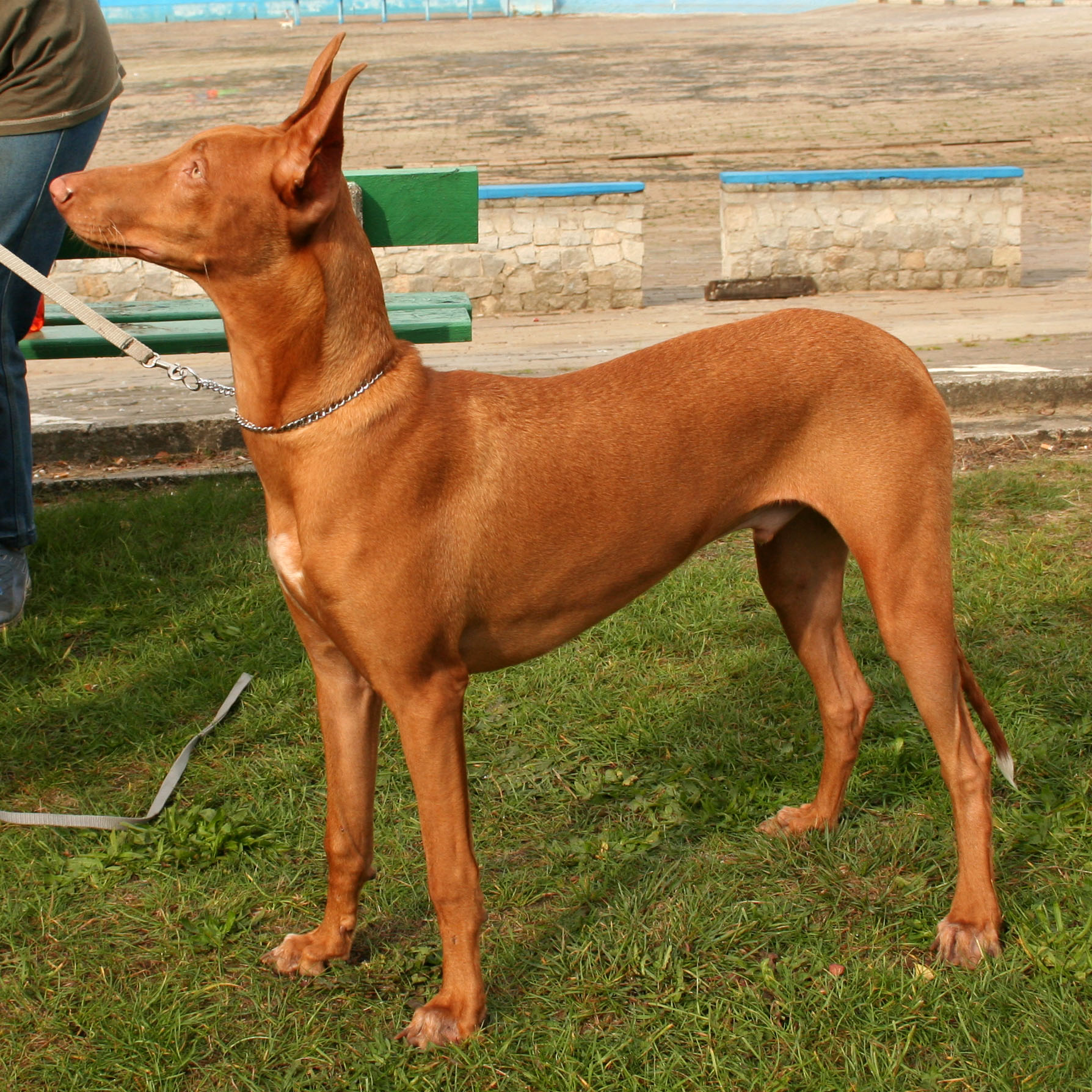
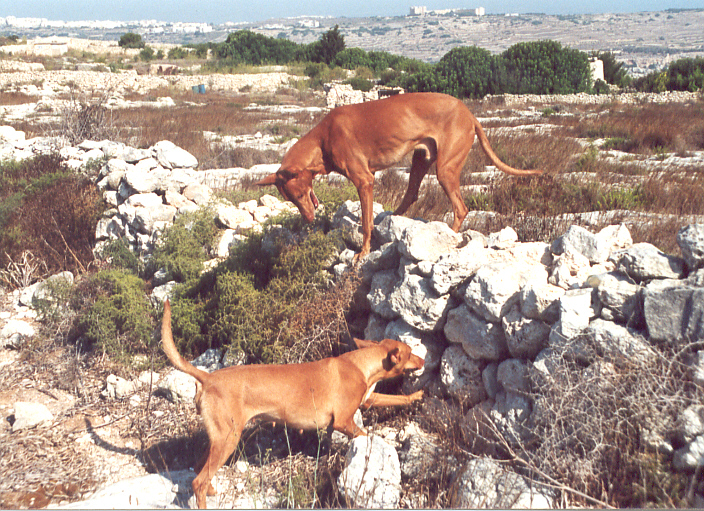
The pharaoh hound is thought to be one of the oldest dog breeds on the planet, and some believe its ancestry can be traced back as far as 6000 years ago in ancient Egypt. While this regal hound does bear a striking resemblance to the dogs depicted in ancient Egyptian sculptures and drawings, it truly gained popularity in the Mediterranean nation of Malta, where it is believed the dog was introduced by Phoenician traders in ancient times. Known as kelb-tal fenek, which means “rabbit dog” in Maltese, the pharaoh hound flourished in this island nation as a hunting companion and was first imported to England and later the United States in the latter half of the 20th century.


Photo: Pleple2000

Pharaoh hounds resemble greyhounds in build, and are extremely fast, graceful dogs. However, they have an even temperament and are very loving towards their owners if trained well. They can be quite reserved towards strangers, so this is one dog that won’t jump all over your company! Pharaoh hounds are medium-sized dogs, usually growing to about two feet tall and weighing 45-55lbs. Typical of sight hounds such as whippets and greyhounds, the pharaoh should never be allowed off-leash unless in an enclosed area, as they will chase rabbits and other small animals regardless of commands.

Rabbit Hunting.
Photo: Jan Eduard

Perhaps one of the most endearing and unique traits of the pharaoh hound is that it will “blush” when excited, with its nose and ears turning a darker shade of red. In other words, they’re like canine mood rings!
Photo: Jan Eduard

Friday, July 8, 2011

A Salute to Space Animals

As you’re probably aware, the Space Shuttle Atlantis made its final launch today, marking an end to the shuttle program and the start of an open-ended hiatus for manned American space flight. As commonplace as shuttle missions now seem, it’s important to remember how many animals blasted off into the unknown and in many cases gave their lives to help advance space programs throughout the world.

Baker, the first monkey to survive space flight.
 The first animals launched into space were fruit flies aboard a United States V2 rocket in 1947 to explore high-altitude radiation exposure, followed just a few years later by a rhesus monkey named Albert II in 1949.


Laika, the first dog to enter orbit.
In 1957, a Russian dog named Laika became the first animal to enter orbit aboard Sputnik 2. Unfortunately, at the time the technology to reenter the atmosphere from orbit did not yet exist, and Laika was unable to survive the mission. She is memorialized by a statue and plaque at the Russian Star City cosmonaut training facility and her likeness has appeared on postage stamps. In 1960, two other Russian dogs named Belka and Strelka became the first animals to enter orbit and return alive on Sputnik 5.


Ham the chimp upon recovery from his mission in 1961.
In 1961, chimpanzees entered the space program when Ham the chimp was launched into space as part of the U.S. Mercury-Redstone 2 mission. Ham was trained to pull levers in flight to receive food, proving that it was possible to perform tasks in space. Later that same year another chimp named Enos became the first chimpanzee to enter orbit.

With manned spaceflight becoming possible in the 1960s, animals became less common on missions. However in the decades since, hundreds of animals from tortoises to mice have taken part in missions as part of scientific studies. Even as recently as May, 2011 spiders were taken into orbit on the final flight of Space Shuttle Endeavor to study the effects of zero gravity on their behavior.


Space Shuttle Endeavour
 Although the future of space exploration is uncertain, we all owe a debt of gratitude to the brave animals that have helped advance technology and our understanding of the universe.

Thursday, June 30, 2011

Your Couch Might Be Making Your Dog Sick

When the weather gets hot many dogs prefer to spend their day curled up on the couch, and if that couch happens to be more than seven years old, it could cause health problems for your pooch.
Couches and chairs made before 2004 were treated with a flame-retardant chemical called PBDE, and according to a study in the journal Environmental Science & Technology, this chemical can enter the bloodstream of animals and cause health problems. Humans can be affected by this as well, but studies showed that PBDE levels in dogs tested were 5 to 10 times higher than in people.

PBDE has been taken off the market since 2004, but many people who have older sofas and own pets may want to consider buying newer furniture.

Monday, June 20, 2011

Local Animal Shelter Breaks Adoption Record

In local animal news, one of our biggest area animal shelters, Kansas City's Wayside Waifs, had their Adopt-A-Thon this past weekend, offering half-price adoptions on Saturday and Sunday. Amazingly, the shelter set an all-time record with 316 animals adopted!


Photo: Kimberley Wall via The Examiner
 Wayside Waifs was one of many animal shelters in the Midwest that volunteered to take on lost and orphaned animals after the tornadoes that affected our area in May. With over 300 pets on their way to happy homes after this weekend, this no doubt gives them a lot of extra space!

Thursday, June 16, 2011

Kate and Pippin

This is one of those things that just makes you smile. A year or so ago a baby fawn was abandoned by its mother on photographer Isabel Springett’s property. After about three days she decided to rescue the fawn, naming it Pippin, and the baby deer was immediately adopted by Springett’s Great Dane, Kate. Over the next year Springett chronicled the growth and friendship of the dog and deer in a series of videos and photographs.


Photo: Isobel Springett

According to her videos, Pippin, now fully grown, has gone off to live with other deer, but still visits Isobel and Kate every day.

Wednesday, June 8, 2011

How Animals Keep Their Cool

Now that summer’s here, a lot of us probably plan on spending our free time at the pool. When it’s hot outside, nothing’s better than jumping into some nice, cool water to relax. But, when a/c or an ice-cold dip isn’t an option, our bodies still find a way to keep us cool; we sweat. Animals in the wild don’t have the option to crank up the air conditioner when they get too hot, so they’ve developed their own ways to cool down.
Photo: CoolFox
Now, we all know that dogs will pant when they get hot, as their tongues are very effective at releasing heat from their bodies, but did you know they also sweat from their feet? Dogs don’t have a lot of sweat glands like we do, but if overheated they can sweat from between their toes. Other mammals such as squirrels sweat in this same way. Cows can sweat from their muzzles, and rabbits sweat from their lips, though neither nearly as much as humans. Birds have no sweat glands at all, so they will flare their feathers and open their mouths in hot weather to increase their surface area and evaporate water from the surface of their bodies.

Photo: Rene Modery
 Have you ever heard the phrase “sweating like a pig”? Well, that’s not really possible, because pigs don’t sweat at all. To regulate their body temperatures, pigs have to roll in mud or water, which draws the heat from their bodies. They look like a mess, but they’re just trying to stay cool!

Photo: Andrew Smith
Cold-blooded animals such as reptiles, amphibians, and fish have body temperatures that are the same as the air or water around them, and do not sweat. Land-going reptiles that are too hot will do their best to find shade or burrow into cool soil. If shade is not available, some have the ability to lighten their skin color, making it more reflective. Fish often seasonally migrate to deeper, cooler waters to regulate their temperatures.
Photo: Phillip Halling
Of course, we’re not the only ones who enjoy a nice swim in hot weather. Have a safe and happy summer!

Photo: Wen-Yan King


Thursday, June 2, 2011

Road-Tripping with your Pooch

Now that summer has arrived, I’m sure a lot of you are planning on taking a family vacation, and if you’re like me, the entire family includes the dog. Dogs can be great traveling companions, and are usually happy just to be with their people. However, if you take a few extra steps you can make your next road trip more fun for everyone.

To start, make sure your pup is acclimated to riding comfortably in your car for close to the length of the trip you have planned. The car should be large enough that they have plenty of room to stretch out or stand up if they want to. In other words, no Great Danes in a subcompact! If you have leather or vinyl seats, put down a sheet or towel to give your pup some more walking traction, and consider a seatbelt harness if he or she just won’t stay put.

If your dog tends to get carsick, consider feeding him a couple of ginger snaps right before the trip. Ginger has long been used to treat nausea in people, and it helps with dogs too. An elevated perch that allows them to look outside the vehicle can provide a sense of equilibrium and help calm their nerves as well. Also, be sure to take along more water than you’ll likely need. Dogs can have sensitive stomachs, and switching them immediately to a different water source when you reach your destination can make them sick. Instead, mix in some of the water you brought with the new water until your pup gets used to it.

Finally, some dogs just can’t be let loose in the car, so the use of a properly-sized crate may be necessary. Just keep in mind that crates aren’t always near a/c vents, so you’ll need to be especially watchful that your pup doesn’t overheat, and include a pet crate fan if possible. Be sure to stop frequently for water breaks, and never leave your dog in a hot car!

As always, you should consult your veterinarian for any specific pet travel issues, but hopefully these tips can help make your next trip more enjoyable for every member of your family. 


Photo Credit: LNJ

Wednesday, July 22, 2009

Pit Bull Terriers Can Be Your Best Friend Too

My dog, Sahara, turns one this week, so in honor of her, I wanted to take a moment and explain to people why I love her, even though she is a pit bull terrier. Pit bull terriers are one of the most misunderstood breeds. While, yes, people in the past have raised these dogs to fight, that doesn’t mean that they’re an aggressive breed. In fact, it only reflects on their obedience and easy-to-train traits. They are actually a very good family dog because they’re loyal, and they love people. In fact, the American Pit Bull Terrier was the most popular family dog in the first part of the 20th century. It’s not this breed’s fault that the wrong people took this eager-to-please breed and trained them to fight. And it’s also not their fault that the media blew these stories out of proportion. I just wanted to take today to explain my love for this breed because I hate that people act nervous or scared every time I tell people what kind of dog I have. After reading this, I hope that you give pit bulls a second chance and actually hold out your hand to them because all they’re going to do is sniff it and lick it, not bite it. 

Unfortunately, the only photo I have of her is when she was only a couple of months old (pictured above), but I found one that looks exactly like her now, except she’s all black instead of having a white spot on her chest (pictured below).

Wednesday, June 3, 2009

Faith Can Achieve Anything

I saw this and had to share it because, not only is it an amazing achievement for a dog, it’s an uplifting story as well. This dog was born in 2002 with two healthy hind legs, but only one abnormal front leg that eventually had to be amputated. Her own mother didn’t want her, and her first owner thought about putting her to sleep because they thought she had no chance of survival. Her present owner, Jude Stringfellow, however, had more faith than that, which is why she named her “Faith.”

For six months, she trained her and rewarded her with peanut butter whenever she would stand up and jump around. Over time, Faith learned to balance on her two hind legs, and now she can walk like a human. She has received lots of recognition, including a book called “With a Little Faith.” And she was even considered to be in one of the Harry Potter movies. This just goes to show that you should never give up, even if something isn’t working the way it’s “supposed” to. There’s always another answer; you just have to find it.


Monday, April 13, 2009

The Obamas Get Their First Puppy

A Portugese water dog named Bo graced the White House with its presence this weekend. Ever since the President announced that he’d be getting his daughters their first dog this year, animal lovers everywhere have been guessing what kind. This black and white puppy was a gift from Sen. Ted Kennedy (from Massachusetts) because he knew the first family needed a dog that’s good for kids with allergies, which Malia has. After a couple of “meetings” with the dog, the family has decided to keep it, and it officially moves in on Tuesday. Although many animal rights activists are disappointed that they didn’t get a rescue dog, the Obamas will be donating money to the D.C. Humane Society. To read more about the First Dog, visit the Washington Post.

Thursday, April 9, 2009

A New Dog Exercise

Get out an extra mat because your favorite pet can now join yoga class! Doga has recently become a popular means of exercise because it allows you to do yoga with your dog. Depending on how large your dog is, you can incorporate it into your workout by using it as a weight or just using it as a prop to help you stretch better. Of course, the class — which includes massage and meditation for the dog — is also good for your pet. For more information about doga, check out this article from The New York Times.

Friday, November 14, 2008

Is Obama Getting A Hairless Puppy?

A hairless puppy might become the new White House hound. A Peruvian association is offering U.S. President-elect Obama's family Machu Picchu, a hairless, hypoallergenic puppy. This could be the perfect choice for Obama's daughter Malia, who is allergic to most breeds.
View a video of the hairless puppy here:

Friday, August 29, 2008

Mixed Dog Breeds: Augi


The Augi is a cross between an Australian Shepherd and a Welsh Corgi. Isn't the Augi above a cutie?! Very intelligent and energetic, this dog requires daily exercise outdoors and lots of love! Luckily, the Augi is easy to pottytrain and can learn advanced commands with little trouble. The breed is eager to please and has some of the herding tendencies of the Australian Shepherd.

Wednesday, August 27, 2008

Mixed Dog Breeds: Chi-Poo/Wapoo

Perhaps one of the cutest mixed dog breeds ever (in my opinion), the Chi-Poo or Wapoo is a cross between a Chihuahua and a Poodle.

The Chi Poo has a shoulder height of 6-15 in (15-38 cm) and weighs 2-17 lbs (1-8 kg). Chi Poos from Toy Poodle crosses are smaller than those from Miniature Poodle crosses. The Chi Poo’s body and head shape can vary from Chihuahua to Poodle appearance depending on genetic influence.

Because of the Poodle within the breed, the Chi Poo is usually a light shedder, making it a good match for allergy sufferers.

The Chi Poo is intelligent, lively, and highly affectionate. They are very devoted their owner, some tend to bond most closely with one person. Chi Poos tend to follow their owner from room to room, eager to play or cuddle up. They love to amuse their owners with clever antics. Some Chi Poos tend to bark frequently. Chi Poos are good natured and highly friendly due to the Miniature Poodle influence within the breed. They are affectionate with strangers, dogs, and other pets. Young children should be supervised around the Chi Poo to ensure they treat the dog with respect.

The Chi Poo has a lifespan of 10-15 years. Chi Poos can suffer from health problems affecting either of their parent breeds, including snoring and wheezing, dental problems (dental chews or tooth brushing several times a week is recommended), cataracts, glaucoma, ear infections, and obesity.

The Chi Poo is intelligent and eager to please, making it easily trained. A gentle approach is recommended.