Showing posts with label Cow. Show all posts

Tuesday, December 24, 2013

Modern Day Cow Milking

It used to take a person one hour to milk six cows by hand.

 Picture from The Milk Run

Today, a person can milk 100 cows in an hour with modern machines.  Before modern milk delivery and dairies, if a person was traveling and wanted milk, they had to bring their cow along with them on their journey.

Monday, October 10, 2011

The Columbian Exchange

Christopher Columbus first arrived in the Americas on October 12th, 1492. Columbus Day is celebrated in the United States today in memory of that event and how it undoubtedly changed the world forever. One of the biggest impacts his arrival had was due to the number of animals and crops introduced to the New World; this is known as the Columbian Exchange.

From a biological perspective, both North and South America were very different places before European settlers arrived. With the exception of alpacas and llamas there were virtually no large animals in the Americas suitable for domestication. The Europeans introduced cattle, sheep, goats and of course, horses; all animals considered vital to both the history and modern economies of the Americas.
The new presence of these animals, all either nonnative or extinct in the Americas for thousands of years, changed life for native peoples significantly; large livestock animals allowed farming cultures to become ranching cultures, and the horse allowed native tribes the nomadic freedom to hunt large animals such as bison.
With trade between Europe and the Americas open for the first time, some New World animals were introduced to Europe as well. Turkeys, llamas, alpacas and guinea pigs were all introduced to Europe and Asia, where they are now common.
Though there is some debate over who actually “discovered” the New World, there is little doubt that the animals introduced during the Columbian Exchange affected it in a very profound way.

Thursday, September 8, 2011

World Record Steer

The Ankole-Watusi, a breed of cattle native to Africa, is not particularly large for a cow. Usually weighing no more than 1,600lbs, many cattle breeds can grow larger and heavier. What makes Watusi cattle distinctive are their large, usually upswept horns that are used for self defense. And although many breeds of cattle have horns, none have ever topped those of a Watusi steer named Lurch in terms of sheer mass.
Photo: Rocky Ridge Refuge
Lurch was adopted at 5 weeks old in 1995 by Janice Wolf, founder of the wonderful Rocky Ridge Animal Refuge in Arkansas. By the time he had reached three years of age Lurch had already broken the Guinness World Record for largest horn circumference, but he wasn’t done growing. Before his passing in 2010 Lurch’s horns had exceeded 38 inches in circumference and measured nearly eight feet tip to tip. It is estimated that each horn weighed over 100lbs.
Photo: Rocky Ridge Refuge
To find out more about Lurch and the Rocky Ridge Refuge where he spent his life you can visit their website.

Wednesday, August 31, 2011

The Gigantic Gaur

Though not as large as some domesticated cattle, gaur are the largest wild cattle on earth. In fact, the only land animals that regularly grow heavier than gaur are elephants, rhinos and hippos. The largest male gaur can be ten feet long, stand over six feet tall at the shoulders and weigh well over 4,000lbs!
Gaur are mostly dark brown in color with older bulls appearing nearly black. Males can be identified by the large dorsal ridge on their backs which can extend several inches higher than the rump. Both sexes feature horns that can be over two feet long connected on the head by a grey ridge of fur.

Once common throughout most of southern Asia, gaur populations have seriously declined and fragmented over the last fifty years. Overhunting, poaching and destruction of habitat are the main causes of this, leading to these animals currently being classified as vulnerable and nearly endangered. Their current ranges included portions of India, Vietnam, Cambodia, Laos, China, Thailand, Bhutan and Nepal.

Gaur are not known to be particularly aggressive animals and rarely fight even amongst themselves. Fully grown males are far too large for any natural predator except for tigers, and have even been known to kill tigers in self defense. However, herds near human populations can be short tempered towards both humans and livestock animals.


Friday, August 19, 2011

The Magnificent Mountain Goat

Although called a goat, mountain goats are actually a member of the animal family that includes cows, antelope and gazelles. Its genus, Oreamnos, roughly translates to “mountain lamb”, which makes sense given the high altitude at which these animals live. Found exclusively in the high mountain ranges of western North America, mountain goats are excellent climbers that spend most of their time at elevations of up to 13,000 feet; far out of the range of most predators.
Mountain goats are white in color with a noticeable beard and rearward-curving horns on both sexes. They have a double coat that includes a dense under layer covered with an outer coat of hollow hairs that moult in the spring. This thick outer coat allows them to withstand temperatures as low as -50 degrees F and 100mph winds. For as sure-footed as they are, mountain goats are quite large. They usually stand over 3 feet at the shoulders, and weigh anywhere from 100-300lbs.

Due to their imposing size and the high altitudes at which they live, mature mountain goats are not easy prey. Though they do have to be wary of wolves, cougars, and bears, especially when traveling between peaks at lower altitudes, the biggest threat of predation comes from golden eagles, which have been known to attack young goat kids. Mountain goats can and will use their horns to injure or kill large predators or humans that get too close to their kids; however, they are not naturally confrontational animals.
Mountain goats prefer to live in groups of 3-50 animals and spend their time foraging for grass, moss, lichen and other high altitude foliage. They currently exist in significant numbers are considered a species of least concern by the International Union for Conservation of Nature

Wednesday, June 8, 2011

How Animals Keep Their Cool

Now that summer’s here, a lot of us probably plan on spending our free time at the pool. When it’s hot outside, nothing’s better than jumping into some nice, cool water to relax. But, when a/c or an ice-cold dip isn’t an option, our bodies still find a way to keep us cool; we sweat. Animals in the wild don’t have the option to crank up the air conditioner when they get too hot, so they’ve developed their own ways to cool down.
Photo: CoolFox
Now, we all know that dogs will pant when they get hot, as their tongues are very effective at releasing heat from their bodies, but did you know they also sweat from their feet? Dogs don’t have a lot of sweat glands like we do, but if overheated they can sweat from between their toes. Other mammals such as squirrels sweat in this same way. Cows can sweat from their muzzles, and rabbits sweat from their lips, though neither nearly as much as humans. Birds have no sweat glands at all, so they will flare their feathers and open their mouths in hot weather to increase their surface area and evaporate water from the surface of their bodies.

Photo: Rene Modery
 Have you ever heard the phrase “sweating like a pig”? Well, that’s not really possible, because pigs don’t sweat at all. To regulate their body temperatures, pigs have to roll in mud or water, which draws the heat from their bodies. They look like a mess, but they’re just trying to stay cool!

Photo: Andrew Smith
Cold-blooded animals such as reptiles, amphibians, and fish have body temperatures that are the same as the air or water around them, and do not sweat. Land-going reptiles that are too hot will do their best to find shade or burrow into cool soil. If shade is not available, some have the ability to lighten their skin color, making it more reflective. Fish often seasonally migrate to deeper, cooler waters to regulate their temperatures.
Photo: Phillip Halling
Of course, we’re not the only ones who enjoy a nice swim in hot weather. Have a safe and happy summer!
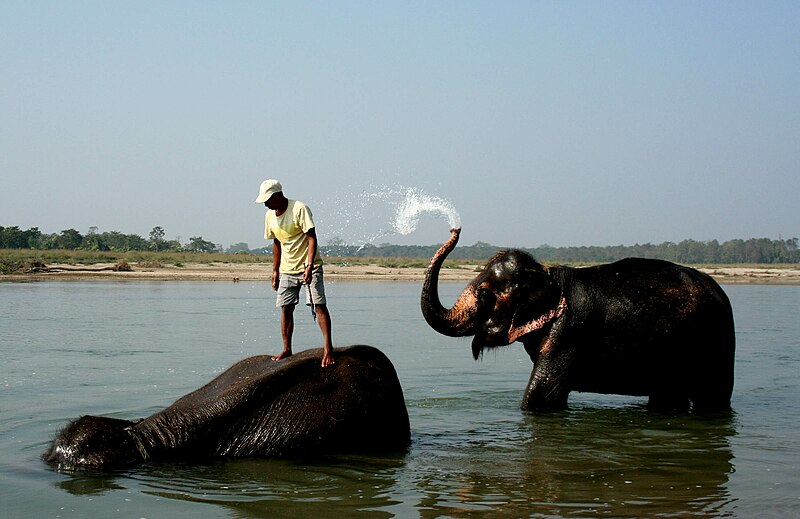
Photo: Wen-Yan King


Friday, April 18, 2008

Earth Day

Let's talk about reducing your Carbon Footprint*. These adorable shoes for kids are called Pedoodles. We sell them here at The Jungle Store, and I think they are a great example (even visually) of leaving a small footprint.


These tiny shoes are about as eco-friendly as you can get. The leather uppers are made from reclaimed couch scraps, the flexible rubber soles from recycled shoe soles. (Pedoodles takes the irregular shoe soles that other factories would throw out and melts them back down for their shoes.) The interior of the shoes are currently the same reclaimed leather, but will soon be made from PET – material created from recycled plastic bottles. Pedoodles are currently packaged in a gift tote made from plastic. The Pedoodles company is changing over to a new tote that will be made from recycled boxes. Using recycled and reclaimed materials is just one way to reduce carbon emissions.

We live in a consumer driven economy. If you become an educated consumer, your buying power will reward companies that are working to find solutions for a healthier planet. Here are some places to start:

Carbon neutral clothing - http://www.carbonneutralclothing.com/
Yarn and fabrics - http://www.prairiewools.com/
Local Organic Food - http://www.localharvest.org/
Drinks - http://www.treetini.com/
Music - http://www.tunesfortrees.com/


And while you're leaving those small footprints, take your dog along with you. All dogs, big and small, need proper exercise, not just a romp in the backyard. Dogs are pack animals and travelers by instinct. They need to walk and they like to walk with you. So go for a stroll, you'll be helping your dog's mental state, reasserting your position as the leader of the pack and getting some great exercise for yourself. Good, daily walks may mean you don't have to drive your SUV to the gym anymore.


*Carbon Footprint: "the measure of the impact of human activities on the environment in terms of the amount of green house gases produced, measured in units of carbon dioxide."

Wednesday, April 16, 2008

Earth Day

Gaylord Nelson, the Founder of Earth Day, frequently spoke about making sacrifices today to benefit the generations to come. There are so many little things we can do, and when added up, they can have a huge impact on our world.

- Wash your clothes at 85° or colder. You'll be using 40% less energy! Your detergent will work just as well on the cooler temperature and your clothes will have a longer lifespan.

- Change over to energy efficient light bulbs. Using CFLs (Compact Florescent Lights) can cut your energy usage by 75%. They may seem a bit pricey, but they last 10 times longer than other light bulbs. This also means fewer light bulbs in the landfill!

- Think about Food Miles. The average plate of foods comes to our table from 1200 miles away. That is a lot of packaging, gasoline, CO2 emissions, etc. Think locally when buying your produce and meat. Buy a share in a vegetable of meat co-op. Most grocery stores now have "local" markets within their larger stores. These items usually come from within 100 mile radius.

Thinking about food (which I often do) reminded me of the story I did on the Texas Longhorn Basketball team. We were having fun deciding which college mascots could beat which other mascots. In researching the Texas Longhorn I learned they are extremely hardy, surviving difficult conditions and thriving on little forage. They also produce a leaner, healthier meat and they are locally "grown."

Thanks to Clinton & Charles Robertson and Flickr for the Photo.

Sunday, March 16, 2008

Big 12 Tournament

I usually write to you a lot sooner than this on a Sunday, but why discuss the possible outcome of the Big 12 Tournament when we can discuss the outcome.

The University of Kansas Jayhawks beat the University of Texas at Austin Longhorns 84 – 74. It was hard fought game and the lead changed multiple times, keeping the contest much closer than the final score implies. Yesterday, I told you about Jayhawks and what feisty, aggressive birds they would be, if they were real. When you learn about the Texas Longhorn, you’ll know why the Big 12 Tournament Championship was such a wonderful game.

The Texas Longhorn is a self-sufficient, hardy, intelligent breed of cattle. They can thrive where other cattle breeds fail. Needing little water, the Texas Longhorn will find forage in near desert conditions and can survive under extremely harsh weather conditions. Longhorn calves are tough and the entire breed is resistant to parasites and disease. Despite their easy management and unparalleled hardiness, their leaner beef quality was seen as a drawback and by 1924, the Texas Longhorn was almost extinct. The United States Forestry service collected a small herd and built the breed back up, keeping them in Texas State Parks. Their novelty, variance of color and incredible horns soon drew the attention of other cattle enthusiasts. The Texas Longhorn is continuing to increase in numbers as beef preferences have changed. What once was a deficit is now an asset and the Longhorn’s lean, low cholesterol, low calorie meat is highly prized.

Let’s hope for a rematch of Kansas and Texas in the National Basketball Championship. It’ll be a great game to watch.

Image:Texas Longhorn logo.svg

Saturday, February 23, 2008

Presidential Pets

President William Taft brought a growing family into the White House and with them came a Holstein Cow named Pauline Wayne. Besides providing for the practical dairy needs of the presidential family—Pauline produced about 16 gallons of milk a day—she was also considered a pet. Pauline was given free range of the White House lawn and there are a number of pictures of her peacefully grazing there.

When William Taft gratefully left the presidency, Pauline also went into retirement. Her final home was the Wisconsin farm of Senator Isaac Stephenson. She did have one last moment in the headlines when she was featured at the International Dairy Show in 1911. Her milk was sold to souvenir hunters for $0.50 /small bottle. The net result was $80/day for President Taft. Pauline was the last presidential cow to live at the White House. Below is a picture of Pauline in front of the then Navy building, now known as the Eisenhower Executive Office building.


Photo courtesy of the Library of Congress.

Friday, July 6, 2007

Thats a lot of meat

It is estimated that there are 1.4 billion head of cattle in the world today.

Friday, May 4, 2007

By The Numbers: Dairy Cows

The average cow produces approximately 2,305 gallons of milk each year, which equals to 6.5 gallons each day. The record amount for a cow to produce in one year was 7,000 gallons! Over her lifetime, a dairy cow will produce enough milk to fill 350,000 glasses.

Farmer Milking Cow