Showing posts with label Pig. Show all posts

Friday, December 2, 2011

The Peccary - Not a Pig

The peccary is known by a lot of names; javelina, musk hog, skunk pig and Mexican hog being just a few. And while these desert-dwelling North and Central American mammals may resemble wild hogs or razorbacks, they actually represent their own family of animals separate from the Suidae family pigs belong to, which originated in Africa, Asia and Europe.
Photo: Photo Bee 1
There are four species of peccary, with the most common species, the collared peccary, being found as far north as the Southwestern United States. Peccaries are usually 3-4 feet long and weigh 40-80lbs. Like pigs, peccaries are omnivores and feed on a wide variety of small animals, grass, fruit and cacti. They have fairly large tusks that sharpen themselves when the mouth is opened and closed that can be used as a weapon.

Most peccaries are diurnal, meaning they are active during the day, and live in groups of six to nine members. Like pigs, peccaries are unable to sweat or pant to cool off, so they spend the hottest part of the day near water sources or relaxing in the shade. The peccary gets its “skunk pig” nickname from the oil glands on its rump which secrete a strong, distinctive smell.

Though peccaries do face natural threats from jaguars and coyotes, they are very capable of using their tusks to defend themselves. Residents in urban areas are warned not to feed peccaries as this can lead to them losing their fear of humans and possibly becoming aggressive towards people.

Tuesday, July 5, 2011

The Fox-Eagle Connection

Island foxes, found only on California’s Channel Islands are among the rarest foxes remaining on earth. At less than 20 inches long and only about six inches tall, they are significantly smaller than most foxes, and have developed and evolved in an almost completely geographically isolated island environment. Each of the Channel Islands plays host to a slightly different species of island fox, and populations of many had dwindled to less than 20 animals by the late 1990s.
Island Fox
So what was the cause of this sharp decline? Surprisingly, human population growth and loss of habitat are not completely to blame in this situation, as the majority of the Channel Islands are protected land. Rather, biologists point to a shift in eagle populations. Bald eagles were once native to the Channel Islands, but in the 1960s their populations were decimated due to use of the pesticide DDT. With the bald eagle gone, smaller golden eagles began nesting on the Channel Islands; and whereas the bald eagles eat fish, golden eagles prey upon mammals.
Golden Eagle
The golden eagle presence seemed to have little effect on island fox populations for nearly 30 years. Then in the early 1990s the National Park Service exterminated the nonnative feral pigs that had been introduced to the islands, eliminating the golden eagle’s primary food source. Due to their isolation and lack of any natural predators, the island fox was not equipped to being preyed upon, and because of this were nearly driven to extinction.

Conservationists are taking a multi-pronged approach to protecting the island fox. They are making attempts to capture and relocate golden eagles and other nonnative species to the mainland, and are no longer allowing visitors to bring pets to national parks on the islands, as island foxes are susceptible to diseases from domestic dogs. Finally, attempts are being made to reintroduce bald eagles to the Channel Islands, as a healthy bald eagle population would prevent the return of golden eagles. These steps combined with captive breeding programs will hopefully allow this rare species to continue on.
Island Foxes in Captivity

Wednesday, June 8, 2011

How Animals Keep Their Cool

Now that summer’s here, a lot of us probably plan on spending our free time at the pool. When it’s hot outside, nothing’s better than jumping into some nice, cool water to relax. But, when a/c or an ice-cold dip isn’t an option, our bodies still find a way to keep us cool; we sweat. Animals in the wild don’t have the option to crank up the air conditioner when they get too hot, so they’ve developed their own ways to cool down.
Photo: CoolFox
Now, we all know that dogs will pant when they get hot, as their tongues are very effective at releasing heat from their bodies, but did you know they also sweat from their feet? Dogs don’t have a lot of sweat glands like we do, but if overheated they can sweat from between their toes. Other mammals such as squirrels sweat in this same way. Cows can sweat from their muzzles, and rabbits sweat from their lips, though neither nearly as much as humans. Birds have no sweat glands at all, so they will flare their feathers and open their mouths in hot weather to increase their surface area and evaporate water from the surface of their bodies.

Photo: Rene Modery
 Have you ever heard the phrase “sweating like a pig”? Well, that’s not really possible, because pigs don’t sweat at all. To regulate their body temperatures, pigs have to roll in mud or water, which draws the heat from their bodies. They look like a mess, but they’re just trying to stay cool!

Photo: Andrew Smith
Cold-blooded animals such as reptiles, amphibians, and fish have body temperatures that are the same as the air or water around them, and do not sweat. Land-going reptiles that are too hot will do their best to find shade or burrow into cool soil. If shade is not available, some have the ability to lighten their skin color, making it more reflective. Fish often seasonally migrate to deeper, cooler waters to regulate their temperatures.
Photo: Phillip Halling
Of course, we’re not the only ones who enjoy a nice swim in hot weather. Have a safe and happy summer!
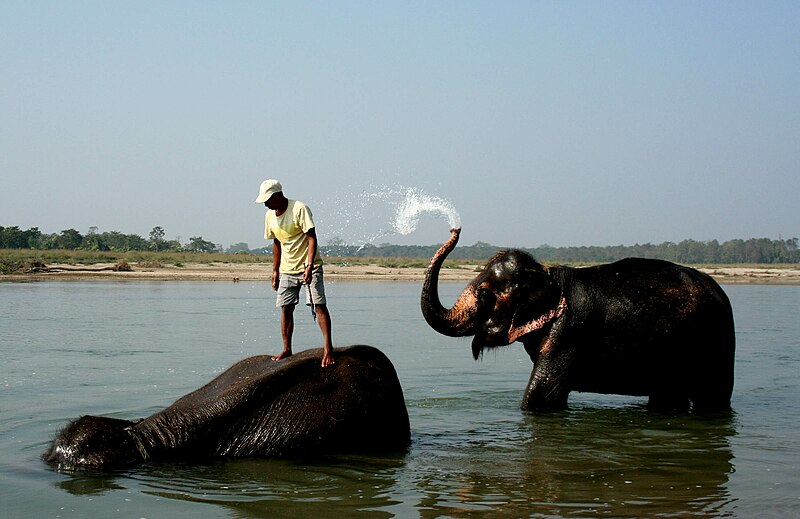
Photo: Wen-Yan King


Tuesday, March 1, 2011

National Pig Day!


"No man should be allowed to be President who does not understand hogs." - President Harry Truman

Did you know pigs are as brainy as dogs and often use their snouts as tools to nudge open latches or dig under fences? Even though pigs may have a reputation for being lazy, they’re fast runners.


Since pigs grow quickly, doubling their weight within a week of birth, a single piglet would grow too fast for the director to film all the scenes needed in the movie Babe. They had to bred 46 pigs just for the movie.
Plush cuddly piglet stuffed animal
Cuddle up with a piggy of your own! Or save you coins in the houndstooth Piggy Bank! All the pig accessories and items you would ever want to celebrate this day!


Houndstooth Piggy Bank

Saturday, May 24, 2008

Animals at War - Strange but True

Ever heard of bomb sniffing rats? Or Frogman killing dolphins? How about landmine detecting bees? Humans have a great appreciation for the natural abilities of animals. That appreciation can lead to bizarre, inhumane and occasionally, benignly beneficial uses of animals in wartime.

The Bizarre: History is replete with tales of dolphins rescuing humans from the perils of the sea. Relying on the dolphin's natural curiosity and affinity to humans, the US Navy began the "swimmer nullification plan." Attaching hypodermics filled with compressed CO2 to the dolphin's nose, the marine mammals were trained to find divers swimming in restricted areas and inject them. Getting injected with compressed CO2 kills you, and it also makes your body float to the surface so you're easily retrievable. Supposedly 40 Viet Cong frogmen were killed this way.

The Inhumane: Over the course of thousands of wars, numerous types of animals have been used as living incendiaries. Cats, dogs, pigs, rats, even camels have all been lit on fire and pointed at the enemy. Of course nothing prevented these animals from turning around and running back through the host forces (makes you cheer a bit). Needless to say, the practice ultimately fell out of favor.

Unfortunately, militaries discovered safer (for them) ways to use animals to decimate enemy forces. What did they do? They strapped bombs to them. Tank dogs were trained to run under enemy tanks where their bomb harnesses would be detonated. Free-tailed bats were strapped with timed incendiary devices. The plan was to release them over Japan where their natural instinct would cause them to roost in the eaves of factories and warehouses. Once there, the timing devices would go off, causing the bat, and hopefully the building, to catch fire. Cats, wearing small explosives, were to be dropped over enemy ships. With their natural dislike of water, the cats would be sure to land on the ships and then could be exploded. Thankfully, most of these projects went nowhere. The bats escaped, burning down an Air Force hanger and blowing up a general's car. The cats, mercifully, lost consciousness soon after they were ejected from the planes.

The gathering strength of worldwide Animal Rights Groups has largely brought an end to such schemes.

The Benignly Beneficial: Glow worms were used in the trenches of WWI to create enough light for soldiers to read maps by. Gambian Pouch Rats, with their incredible sense of smell, are being used to sniff out landmines. Their small size protects them from triggering the mechanisms. The rats are currently clearing mines from much needed farm land along the coast of Mozambique. Bees are also helping to find long buried landmines. Having been fed trace elements used in the making of explosives, the bees naturally swarm around buried mines that leak these elements into the atmosphere. Small "backpacks" attached to the bees help humans determine where the bees are congregating. Once the humans arrive, they can dig up and dispose of the mine. The amount of bees needed to create a hive of landmine seekers costs about $100. The bees can be trained in less than 3 hours and have a 98% success rate of finding long buried and forgotten landmines.

Of course we know what would be best for animals as well as humans with regard to the practice of war, but conflict will occur. More than likely, our need for animal helpers in battles will also occur. Hopefully it will only be in a benignly beneficial way.


Tuesday, March 4, 2008

Animals in Literature

In Charlotte's Web the intelligence and love of a spider saves the life of a pig.

We don't know much about the type of pig Wilbur is. The farm girl, Fern, admires his pinkish color and erect ears. This gives us the hint that Wilbur is more than likely an American Yorkshire pig, one of the most popular breeds of domestic pig in the United States. Pigs are highly intelligent, smarter than dogs, and can live for 20 years or more. But Wilbur is destined to be dinner on Christmas day unless someone else's brains help him find a way to stay alive.

Charlotte is that someone and we learn a lot about Charlotte. She tells us herself she is a Barn Spider but it is E. B. White's story that tells us about her species. A Barn Spider prefers a habitat of wooden rafters and eaves. Charlotte makes her home in the doorway of Wilber's sty. Barn Spiders are insectivores and subsist entirely on bugs they catch in their webs. Wilber is horrified as he watches his new spider friend catch, wrap and prepare a juicy fly. It takes him a while to forgive her. Barn Spiders are orb weavers and nocturnal, they hide during the day and rebuild their wheel-shaped web every night. It is always while Wilber sleeps that Charlotte creates the web-messages that convince the farmer to spare him. A Barn Spider's lifespan is not long. Wilber and Charlotte meet in spring, and by fall, Charlotte has grown old and dies.

When we finish Charlotte's Web we'll know we've read a wonderful story about loyalty, compassion and the power of friendship. What we probably didn't know is that we got a great education about Barn Spiders as well.


Monday, January 7, 2008

Who is that masked pig?

Not a warthog, though there is some resemblance. It’s a Red River Hog—a type of wild pig from Africa. These omnivorous hogs are mostly nocturnal. Red river hogs are good swimmers and fast runners. They will eat almost anything and using their snout as a plow can cause considerable damage to agricultural crops.

This picture is courtesy of Matthew Hull.

Saturday, August 25, 2007

"Earth Pig"

This animal is not from Australian, but reminds me of a weird cross of a bandicoot and a kangaroo. Aardvarks live in Africa. Their name came from the Afrikaans/Dutch for "earth pig," pig smiley though they are not related to pigs at all.

Speaking of weird, Aardvark’s teeth aren’t protected by enamel, so they are continually worn away and continually regrowing.

Aardvarks can weigh up to 145 pounds (65 kg) and be 7.2 feet (2.2 meters) long. Yikes, that’s pretty big for a creature that lives by eating ants and termites.

Jungle Jane

Friday, July 6, 2007

Pig Diet

Pigs are omnivores, which means that they consume both plants and small animals.

Find great pig items at The Jungle Store.

Monday, June 11, 2007