Wednesday, March 5, 2014
The Quetzal: One of the Most Beautiful Birds
Tuesday, March 4, 2014
Purple Martins Have Help Finding Homes
Wednesday, June 8, 2011
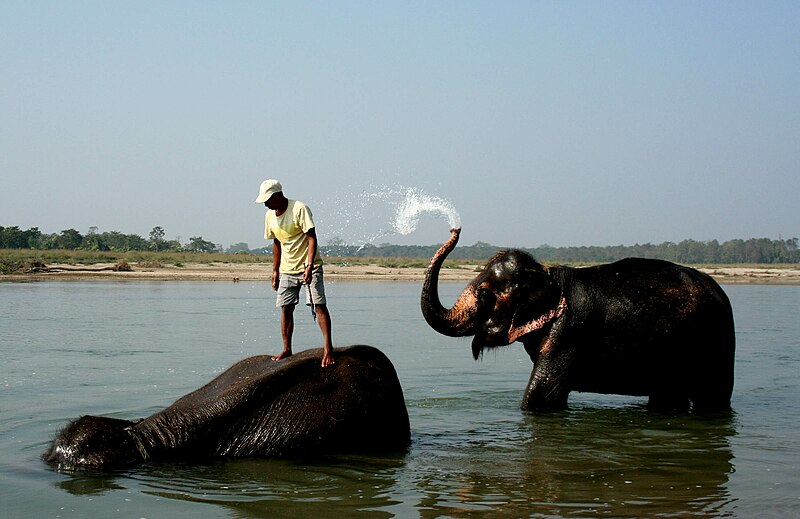
How Animals Keep Their Cool
![]() |
| Photo: CoolFox |
| Photo: Rene Modery |
![]() |
| Photo: Andrew Smith |
![]() |
| Photo: Phillip Halling |
| Photo: Wen-Yan King |
Tuesday, December 1, 2009
Laughter-Like Call is Bushman's Clock
Tuesday, October 27, 2009
Baltimore Orioles Protect Young

The Baltimore oriole is Maryland's state bird, and also the name of its professional baseball team. Female Baltimore orioles create unique, hanging nests for their eggs. When they hatch, both parents feed and protect their young for up to two weeks.
Wednesday, September 23, 2009
Greater Rheas Lay Eggs

The greater rhea is the largest bird in South America. Related to the ostrich and emu, the greater rhea cannot fly. This polygamous bird does lay several eggs though. Females lay one egg every other day for seven to 10 days. Because males have several mates, and the females put their eggs in the same nest, which sometimes holds up to 50 eggs. The male is in charge of incubating the eggs of all its mates for six weeks, until the young are hatched.
Friday, September 18, 2009
Woodpeckers Prevent Headaches
Tuesday, September 15, 2009
Ospreys Swoop for Food

Ospreys are the most widespread birds of prey because they can be found on every continent, except Antarctica. Ninety-nine percent of their diet is made up of fish. Their feet have gripping pads, which allow them to swoop down from heights of 30 to 100 feet and pick up their prey in a matter of seconds. Once they retrieve a fish, though, they sometimes fly for great distances before actually eating it.
Wednesday, August 26, 2009
Common Loon Dives Deep

The common loon is a bird named after the way it awkwardly walks when on land. It’s a migratory bird that often lives in North America’s Pacific and Atlantic coasts, as well as in Europe and Iceland. They are strong divers that can actually dive more than 200 feet below the water’s surface in search of food.
Tuesday, July 28, 2009
Birds of Paradise Dance for Mates

Birds of Paradise are some of the world’s most attractive and unique-looking birds. Their bright colors and long, ruffled feathers make them stand out. Even their mating rituals are one of a kind. To gain attention from females, the males engage in various dances and rituals to flaunt their appearance even more. These performances can last hours and often consume a large portion of the male’s time. Watch the video below to see what I'm talking about:
Tuesday, July 7, 2009
Blue Feet Attract Mate
The blue-footed booby has some attractive feet — at least to its female counterpart. The male blue-footed booby takes pride in its blue feet because they are a big part of its mating ritual. Apart from their vivacious color — the bluer the feet the more attractive the mate — they show off their feet in a high-stepping walk to attract females. However, these feet aren’t just for show; they can also be used to cover the up their chicks and keep them warm.
Thursday, June 11, 2009
Pairing Up
Mouse and Frog


Pony and Cat
Bird and Mouse
Thursday, May 28, 2009
The Giant Albatross

The albatross has been know as a symbol of misery and burden for centuries, due to its significant role in the poem "Rime of the Ancient Mariner." A ship driven off course is lead out of the Antarctic by an albatross, who is then shot by one of the sailors. Afterwards, the ships wanders into uncharted territory, where it stops moving. The angry crew forces the sailor who shot the albatross to wear it around his neck to "illustrate the burden he must suffer for killing it."
Wednesday, October 1, 2008
Fun Hummingbird Facts
* Hummingbird’s consume half of their weight in food daily.
* Hummingbirds are found only in North America and South America.
* Hummingbirds travel at an average 25 miles per hour, with wingbeats of anywhere from 10-15 per second in the Giant Hummingbird, up to 80 per minute by the Amethyst Woodstar.
* A hummingbird can starve to death in as little as two hours, if still active.
* Hummingbirds are so small, that an insect, the Praying Mantis is its natural enemy.
* It's the only bird that can hover, and fly backwards as well as straight up or down.
* Hummingbirds can't walk.
Need facts about another animal? Visit The Jungle Store's Animal Facts Page! If you still can't find what you're looking for, email info@thejunglestore.com with your questions.
Monday, July 14, 2008
If Animals Competed In The Summer Olympics: Aquatics
Today, let's investigate which animals would win in the aquatics sports of diving, swimming, and synchronized swimming.
The anhinga would win gold in the diving competitions, with its graceful movements both in and out of water. Anhingas dive and pursue fish underwater, propelled by their feet, their wings often partly spread. Anhingas often swim with the body submerged and head and neck above the water, slowly submerging to stalk fish, hence the nickname "snakebird".

As for synchronized swimming events, schooling fish would most certainly win. Schooling fish respond quickly to changes in the direction and speed of their neighbors. Anyone who has seen a school of fish can attest to their ability to change direction swiftly while still retaining their closely knit swimming pattern. They can move from one configuration to another and then regroup almost as one unit.
Monday, July 7, 2008
Beyond Dorothy And Toto: Kansas' Indigenous Birds

Kansas has the largest flock of prairie chickens remaining on the North American continent. Prairie chickens were once abundant, but have become extremely rare in most places due to habitat loss. One of the most noteworthy facts about this species is its mating ritual called 'booming' - the males inflate the air sacs located on the side of their necks and snap their tails to attract females.

Sunday, June 1, 2008
Symbiosis - Badgers and Birds
My favorite example of this symbiotic relationship is the cooperation found between the Honeyguide bird, a small, dull-colored bird, and the Ratel, also known as the Honey Badger. I'm sure you've caught the similar word in their names and yes, the sweet stuff happens to be their treat of choice. Both the honeyguide and the ratel prefer honey, combs, bees and larvae to just about anything else. Problem is, alone neither is really up to the task of procuring it. The honeyguide can find a bee hive, but hasn't the size or strength to take on the multitudes within. The ratel is like other badgers, tough and strong with sharp, raking claws. The ratel can certainly break into a hive; it just can't find one easily. Once a honeyguide finds a hive, it starts looking for a honey badger. Making a clattering fuss, the bird gets the badger's attention and starts a slow, flitting process back towards the hive, making sure the badger is following. There is not doubt, that the honeybird is leading the ratel. Once there, the ratel decimates the hive, tearing it to pieces and feasting on the goodies within. The honeyguide bird usually waits until the badger's frenzy is done before helping itself to the left-over wax, honey and larvae.
Monday, April 28, 2008
Animal Architects - the Bowerbird

Our first architect is the Bowerbird. A truly amazing little fellow, they are generally about the size of a pigeon. The builder among these birds is the male and he builds his remarkable structure to attract the attention of a female. Bowerbirds don't live in the bower, or nest and raise young there. The construction is all for the purpose of attraction and mating – a genuine "bachelor pad."
Depending on species, bowerbirds will build one of 3 different types of bower – a "maypole", an "avenue", or a "mat." Mats are fairly simple constructions consisting of a cleared area, possibly padded with plants, and ringed by ornaments like flowers or leaves.
The "avenue" is more detailed. Twin walls of twigs are erected and decorated. Occasionally these walls will arch over the empty space and form a tunnel. Some species of bowerbirds use a leaf or twig to paint the inside of these walls with charcoal and saliva.
The most elaborate bowerbird creation is the "maypole." These constructions use the trunks of young trees as support and stretch a roof-like awning over a broad expanse of ground. The courtyard, as it is called, is heavily decorated with flowers, shells, pebbles, fruits and all manner of brightly colored objects. The male bowerbird carefully arranges all of these objects and removes wilted or unattractive items from the area. He will also plant a lawn of moss under and around his bower, perhaps to draw more attention to his collections. Interestingly, the duller the bowerbird's plumage, the more elaborate and colorful their creation.

What do female bowerbirds think of all this? Only 25% of females visit more than one male's bower before mating. Then the female is off to solitarily build a nest, hatch the eggs and raise the young. Thank goodness she can manage on her own because the males are so wrapped up with the construction, decoration and upkeep of their "pad," they would have no time. Maybe if they snagged one of our snazzy Jungle Store birdhouses they could share a little incubating duty.
Saturday, April 12, 2008
Animals In Golf
If you hole out one shot below par, you've scored a "birdie." I remember the first time I had the opportunity to score a birdie. As I wasted time, pretending to study the putting green so I could calm my nerves, my sister said, "Hey. Did you know that if you make this putt, you'll make birdie. I don't think you've ever done that before." Needless to say, I still haven't.
If you sink your ball two strokes below par, you’ve Eagled. Makes sense. An eagle is a larger and grander animal than a mere birdie. So what is it when you shoot 3 strokes below par? Here in the United States, it is generally called a Double Eagle, but once upon a time it had a more interesting name. 3 under p
ar used to be called an Albatross – a much larger and grander animal than a mere eagle.
Tuesday, April 1, 2008
Meet the Staff
Malcom likes to stay close by our office's front doors. He's great at letting us know when guests arrive.
We have to keep Norton and Bruno at opposite ends of the warehouse. They tend to fight. Once we installed the company pool though, Norton got a lot happier. He spends the majority of his day there. The staff won't swim with him anymore as he tends to splash.
Last week it was my turn to sort out a brief altercation among the Jamison Brothers. I don't know how many times we have to say it. Everybody gets just one donut on Fridays.
Iggy spends the warmer part of the day keeping the parkway free of weeds. What would we do without him?
Susan tends to the landscaping. She'll probably need more staff before the summer is over.


_panting.jpg)