
Showing posts with label Tiger. Show all posts

Tuesday, April 8, 2014

Happy National Zoo Lovers Day!

Each year people across the nation celebrate National Zoo Lovers Day on April 8th. Today is the perfect day to plan a trip to a zoo in your area. Enjoy this "unofficial" holiday with the 175 million other people who visit zoos each year. The first public zoo in the United States was opened in 1874 in New York's Central Park. Today the United States has over 350 zoos! Here is a look at some fun things you can do at zoos all over the world!

Getting a grip: A tiger at Busch Gardens takes part in a tug of war contest with visitors

At Busch Gardens in Tampa Bay, Florida you can play tug-of-war with a tiger. 

In this aquarium you can shake hands with otters (Happy Holidays!)

At the Keikyu Aburatsubo Marine Park in Japan you can shake hands with an otter.

elephant sea lion

At the Oregon Zoo an Asian elephant named Chendra likes to take morning walks with her handlers. She sometimes likes to visit some of the other animals, especially Gus the sea lion.

Thursday, March 13, 2014

A Few Staff Animal Photos

Here at The Jungle Store we have a great love for all animals, ok maybe not spiders, and that means we love taking photos of animals. Here are a few photos our staff have taken from their trips all over the country.


This photo was taken at Black Hills Wild Horse Sanctuary located in Hot Springs, South Dakota. The sanctuary is home to over 600 wild mustangs which have been named America's Luckiest Wild Horses. They offer a variety of tours that can last from two hours to three days, you can even reserve a cabin.


These photos were taken at the Albuquerque BioPark Aquarium in Albuquerque, New Mexico. The aquarium is part of the Biopark which includes a zoo and botanical garden right next to the Rio Grande.


These photos were taken at the Kansas City Zoo located in Kansas City, Missouri. The zoo opened in 1909 and is now spread across 202 acres. In the fall of 2013 the Kansas City Zoo opened its penguin plaza with interactive learning stations and panoramic viewing windows. The zoo is also planning to add a tiger trail, orangutan canopy and giraffe feeding station in the years to come.

Wednesday, August 7, 2013

A Tiger's Appetite

You might thing you have a big appetite, but a tiger can eat up to 60 pounds of meat in one night.

 Picture from Slideshare
 
 Most of the time a tiger will consume about 12 pounds of meat during a meal, but there are times when that number is significantly higher, reaching up to 60 pounds of meat at once.  Normally, the cat will eat until it is full, then cover the remaining carcass with dirt and leaves.  They will continue to feed of the same piece of meat until it is gone.

Friday, December 16, 2011

Blue Tigers?

Although most of us are familiar with white tigers, a rare color morph of the Bengal tiger, documented sightings of Maltese or “blue” tigers have also been reported throughout history.
Artist's rendering of what a Maltese tiger might look like.
As with domestic cats, the Maltese name refers to a “blue” fur coloration that is actually slate grey. Sightings of Maltese tigers have occurred numerous times throughout the 20th century in both the Fujian Province of China and Korea. It is assumed that these blue tigers were most closely related to the now critically endangered South China tiger. If they still exist, Maltese tigers may be some of the rarest animals on earth.

Monday, October 24, 2011

Siberian Tiger Gets Root Canal

Going to the dentist isn’t fun for anyone, and when the patient is a 300lb Siberian tiger, things get a little more complicated.
At the Alaska Zoo last week resident Siberian tiger Kunali had a root canal performed on one of his giant, three inch teeth. Kunali had fractured the tooth several years earlier and veterinarians decided to go ahead with the procedure to prevent the possibility of future infection. The operation on the seven foot cat was made easier due to the donation of a special new hydraulic operating table. Previously these procedures had to be performed in the animal’s exhibits with little space or light.

Kunali was sedated during the operation and is reportedly recovering just fine. According to the dentist, it was the largest tooth he had ever worked on.

Story via.

Tuesday, September 20, 2011

Amazing Animal Hand Art

I’ve decided to take a break today from sharing animal facts with you guys to show you some amazing animal hand art I ran across on Illusion King. The detail of this artwork is incredible! In fact, I’d feel bad about washing my hands if I had any of these painted on me; enjoy!


Thursday, September 1, 2011

Tapirs - Not Your Average Ungulates

Though they are similar in appearance to pigs, tapirs are actually most closely related to rhinoceroses and horses. There are four living tapir species, all with similar trunk-like prehensile snouts that are capable of gripping items. The Baird’s, Mountain, and Brazilian tapir are all native to South or Central America; the Malayan tapir is only found in Thailand and Sumatra.
Baird's tapir - Photo by Bjørn Christian Tørrissen
Tapirs are the largest land mammals in South America and can weigh more than 800lbs. They live mainly in forests, and all except the Mountain tapir usually live close to water. Despite their bulky builds, tapirs are excellent swimmers and spend much of their time in the water cooling off, feeding or hiding from predators.

Tapirs are foragers and eat a large variety of terrestrial and aquatic plants, fruits and berries. Their extended snouts can be used to strip plants and pluck certain berries. When on land the majority of this feeding is done on well-worn forest trails, usually leading to a water source.
Malayan tapir - Photo by Sasha Kopf
Tapirs are very solitary animals; other than when mating or rearing young they will spend most of their lives in complete isolation. Tapirs can begin reproducing at 3-5 years of age, but with a gestation time of up to 400 days, reproduction only occurs every two years or so. However, tapirs are fairly long-lived, and even in the wild can live over 30 years.
Baby tapirs are covered in spots and stripes.
Due to their imposing size, tapirs have few predators. Big cats such as tigers and leopards have been known to hunt them, but this is rare. Other occasional predators include American crocodiles and anacondas.

Due to hunting and habitat loss, all species of tapir are currently considered vulnerable or endangered.


Wednesday, August 31, 2011

The Gigantic Gaur

Though not as large as some domesticated cattle, gaur are the largest wild cattle on earth. In fact, the only land animals that regularly grow heavier than gaur are elephants, rhinos and hippos. The largest male gaur can be ten feet long, stand over six feet tall at the shoulders and weigh well over 4,000lbs!
Gaur are mostly dark brown in color with older bulls appearing nearly black. Males can be identified by the large dorsal ridge on their backs which can extend several inches higher than the rump. Both sexes feature horns that can be over two feet long connected on the head by a grey ridge of fur.

Once common throughout most of southern Asia, gaur populations have seriously declined and fragmented over the last fifty years. Overhunting, poaching and destruction of habitat are the main causes of this, leading to these animals currently being classified as vulnerable and nearly endangered. Their current ranges included portions of India, Vietnam, Cambodia, Laos, China, Thailand, Bhutan and Nepal.

Gaur are not known to be particularly aggressive animals and rarely fight even amongst themselves. Fully grown males are far too large for any natural predator except for tigers, and have even been known to kill tigers in self defense. However, herds near human populations can be short tempered towards both humans and livestock animals.


Tuesday, August 23, 2011

Siberian Tigers - The World's Biggest Cats

Though most people probably picture a wild tiger living in a warm climate, the largest of cats, the Siberian tiger, actually lives somewhere much colder.
The Siberian tiger is almost identical to the now-extinct Caspian tiger that was present across most of central Asia until recently. Caspian tigers were hunted aggressively during the nineteenth and twentieth centuries throughout Russia and China as forests were converted to farmland. The last confirmed Caspian tiger sightings occurred in the 1950’s, though unconfirmed reports still occur in the Middle East.

The current Siberian tiger can only be found in the birch forests of eastern Siberia, far northeastern China and North Korea. The wild population is estimated to be around 500 individuals. It is thought that they continue to exist in these areas because of the low human population density. 

At nearly four feet tall at the shoulders and weighing nearly 700lbs, Siberian tigers are taller and heavier than Bengal tigers. They grow shaggy winter coats to deal with cold temperatures and tend to be less brightly colored than other tigers.

The Siberian tiger is an apex predator that feeds almost exclusively on red deer and wild boar. Both black and brown bears are occasionally hunted, but this is very rare. Brown bears have been known to hunt Siberian tigers as well; an equally rare occurrence. Siberian tigers also occur in the same habitat as wolves, though wolf populations tend to be much sparser in areas where the tiger is present. 
Photo: Jelenia Sika
Despite their massive size, attacks by Siberian tigers on humans are rare. They are known to be extremely solitary animals that prefer to avoid human interaction. Most attacks throughout history have been either by wild tigers that were provoked or captive-raised tigers that did not possess an instinctual fear of humans.


Friday, November 6, 2009

Hear Tigers Roar

At one point, there were eight tiger subspecies, and now there are only five. In the last 100 years, tiger populations have gone from hundreds of thousands to around 1,500. All of the remaining five subspecies are endangered because of hunting and deforestation issues.

Bonus Fact: A tiger's roar can be heard as far as 2 miles away.

Wednesday, July 1, 2009

Liger vs. Tigon

Ligers (left) and tigons (right) are similar because they both are the result of a crossbreed between a lion and a tiger; however, they have some distinct differences. Ligers are more common because the breeding process for them is easier. A liger is born to a male lion and a female tiger, inheriting most characteristics from its lion father. However, like their tigon ancestor, the liger loves to swim when most lions do not. The liger is usually a golden color with muted stripes (from the tiger parent) and spots (from the lion parent). They inherit the best qualities from both parents, including their size, which makes the liger one of the biggest cats in the world (unlike its tigon counterpart). There is greater interest in the liger specifically because of its massive size.
The tigon is born to a male tiger and female lion, and it is significantly smaller then the liger and usually both parents. It has the same features — muted stripes and spots and a golden coat — of the liger; however, it is often born prematurely and has a shorter lifespan. Both the liger and tigon are members of the genus Panthera; they don’t have a scientific name because of their human assisted ancestry.

Friday, February 27, 2009

Don't Get Too Tired: The Weekend is Almost Here!

Happy Friday! If you’re a little tired from a long week’s work, you’re not alone! In fact, all animals yawn when they’re tired. So, check out these different examples of yawning — but beware! — it’s contagious.


Friday, June 20, 2008

The Animals of Kung Fu Panda


If you haven't seen Kung Fu Panda, go see it this weekend! It's a hilarious film, and the animals are so cute. I thought it would be fun to take a closer look at each of the main characters in the film and learn more about the animal species.

Of course, first there's Po the panda, who works in his father's noodle shop and turns out to be a kung fu warrior. I won't go into detail here about pandas since I've covered them thoroughly, so if you'd like to read more on pandas, see my previous posts and The Jungle Store's Panda Fact Page.

Check out this clip of Po showing off his moves with Master Shifu:


Shifu is a red panda. The red panda is slightly larger than a domestic cat and is a mostly herbivorous animal, specializing in feeding on bamboo. It is an excellent tree climber and spends most of its time in trees when not foraging. Red pandas are endangered, due to poaching and fragmentation of their habitat due to deforestation.
Then there are the Furious Five: Tigress, Monkey, Mantis, Viper, and Crane. The Furious Five is a group of highly-skilled martial artists trained by Shifu. I have already covered tigers and monkeys in previous posts and fact pages, so I will skip over them.

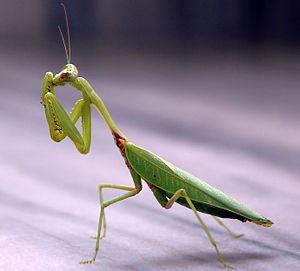
Mantis is a preying mantis . Mantises are notable for their hunting abilities. Their diet consists of living insects, and sometimes, small animals. Most mantises are ambush predators, waiting for their prey to come too close before snatching them up.
Viper is a viper snake, a very colorful and robust animal. The viper snake lives in wet places and also in mountains in small caves. The viper's bright colors help it survive on the floor of the rain forest. This snake can hang by its tail from a branch and catch its prey, which includes birds, amphibians, lizards, small mammals, and nestling. It kills its prey by injecting poisonous venom from its fangs. The viper snake is endangered because its beautiful, smooth skin is in high demand in the fashion industry.

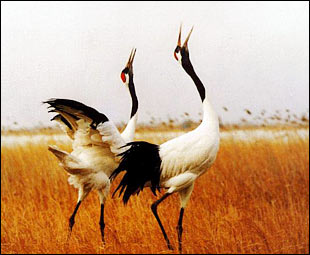
Crane is most likely a red-crowned crane, a species of bird that is very large and is the second rarest kind of crane in the world. In east Asia, the red-crowned crane is a symbol of luck and fidelity. It eats small amphibians, aquatic invertebrates, insects, and marshy plants. Sadly, the red-crested crane is one of the most endangered species of birds in the world.
Tai Lung is the evil snow leopard who escapes from prison and seeks to destroy the Valley of Peace. The snow leopard is a large cat native to the mountain ranges of Central Asia. It is a rare and secretive animal, and because of this, the exact number that remains in the wild is unknown. Snow leopards live solitary lives, except when females are raising cubs. The leopard eats mostly sheep and goats, as well as small prey including marmots, hares and larger birds. They are opportunistic predators, meaning if there is livestock near, snow leopards will attack them. Want to learn more about snow leopards? Check out Zoobooks "Little Cats" softcover.

Have you seen Kung Fu Panda? What did you think of the movie? Who was your favorite character? I'd have to say mine was Po - he was just too funny! My favorite Po quote: "I just ate... so my kung fu may not be as good as later on."

Monday, April 14, 2008

Animals in Golf

Congratulations to Trevor Immelman! He stayed steady and focused and now wears the coveted Green Jacket. There were some attempts to answer my little animal nickname quiz, but nobody got them all, so here goes:

The Tiger (who came in second yesterday) was born Eldrick Woods. His father nicknamed him Tiger and he's now had his name legally changed to Tiger Woods.

The Walrus is Craig Stadler. He earned the nickname due to his enormous moustache that looks much like the walrus's whiskers, or vibrissae. A walrus relies on its whiskers to find food on the muddy bottom of the ocean. Wonder if Stadler uses his to strain his soup?

The Pink Panther is LPGA player, Paula Creamer. Her play is smooth, powerful and focused, much like a panther on the prowl. Since she frequently wears pink, it seems only natural to tag her with a colorful moniker.

The Golden Bear is Jack Nicklaus. He earned the nickname in high school. Upper Arlington High's mascot was the Golden Bear. Of course his powerful swing and his golden hair may have had something to do with it as well.

The Big Cat is another player from the LPGA. Kim Williams is 6ft tall.

The Great White Shark is Greg Norman. His white-blonde hair, and the fact that he comes from Australia, made his nickname easy.

Greg Norman, like other pro-golfers, has used his nickname to create an industry of sportswear, golf accessories, golf courses, etc. You can find almost anything you need for the game with his unmistakable shark logo on it. But, I wonder if Greg has one of these on the back of his golf cart?


I know I'm trying to find a "Beware of the Jungle" one for myself!

Sunday, April 13, 2008

Animals in Golf

Did you see what Tiger Woods did Friday at The Masters? His drive from the 18th tee went way, way right. He landed in the jungle, in the straw, in the trees. There was no way he could use his power or his skill to get out of this mess. Even Tiger Woods can’t drive a golf ball through a tree. So, Tiger used his brains. He hit the ball onto the 10th Fairway. Tenth fairway, you say? Wasn’t Tiger playing the 18th hole? (Obviously he’s been watching how much success I have playing multiple fairways.) Tiger's next shot went from the 10th Fairway to the 18th gree. He made par. Amazing.

Today, Sunday, the last day of The Masters tournament, Tiger Woods is 6 strokes behind the leader. That seems a lot of ground to make up. But, here is your animal fact for the day: Tigers are most successful when they catch their prey from behind!

Tiger Woods is not the only Professional Golfer to be nicknamed after an animal. Can you tell me the real names of the following players? (I’m including Tiger because that wasn’t his given name at birth.) Give them your best shot. Meanwhile I’m going to be working on my short game with this way fun desktop course. (Who says you can't play golf when it's raining?) Answers on Monday!

1. Tiger
2. The Walrus
3. Pink Panther
4. The Golden Bear
5. Big Cat
6. Great White Shark

Check out the Luck of the Leader, Trevor Immelman.

Wednesday, April 9, 2008

Animals in Golf

We are in a bit of a Sports/Animals theme with the NCAA National Championships. (To be fair, we need to say "Congratulations Lady Vols" for your win yesterday!) This week hosts another "major" sporting event that incorporates many animal phrases and references in the game. From its scoring to its history to its playing layout and surfaces, animal terms abound. The game's greatest player is even named Tiger. Of course I'm talking about The Masters.

Legend has it that golf was invented by bored shepherds in Scotland. While tending their flocks, the shepherds would occupy themselves by using their crooks to whack rocks into distant rabbit holes. As happens with humans, the pastime became competitive and the most addictive and frustrating of all sports was born.

Think you're the only one who has snuck away from work to grab a quick 9 holes? James II, King of Scotland, forced an Act of Parliament in 1457 banning golf. Seems his archers and soldiers were too busy playing the game to attend to their military training. Even so, to actually ban the sport offends my Scottish sensibilities. Probably why neither the ban, nor James II lasted for very long.

So "Thank You" to the astoundingly placid nature of sheep. Their unvaried, daily grazing gave the shepherds plenty of empty time. And "Thank You" to rabbits. Their proliferation provided plenty of chances for a "hole in one."


Monday, April 7, 2008

National Basketball Championship

We had fun matching up Mascots for the Big 12 Basketball Tournament. Now that the Kansas Jayhawks will be playing in the finals of the Men's National Championship, let's see if the Memphis Tigers can measure up – Animal-wise.

You can find the definition of a Jayhawk in our March Blog archives. Remember, a Jayhawk is not a real bird, but an amalgam of a Blue Jay and a Sparrow Hawk. A rather formidable creature if it ever did hatch into existence.

Tigers are the largest of all the wild cats. There are 6 recognized sub-species and they roam throughout Asia. Tigers are an apex predator; there is no more dominant animal in their environment. They prefer large game, such as buffalo, elk and boar. Although they can leap higher than any other cat, save the American Mountain Lion, tigers do not hunt birds. They do, however, kill an average of 50 people a year.

What does all this mean for the National Championship? Besides it promising to be a wonderful game, I really can't say. How do we at the Jungle Store want it to turn out? I'll answer by leaving you with another interesting animal fact. The Tiger's saliva contains natural antiseptics. All the better to lick its wounds with.

Thanks to KennKiser and Morgue File for the photo.

Thursday, March 6, 2008

Animals in Literature

Could The Jungle Store blog not mention
Rudyard Kipling's classic, The Jungle Book? I say, nay nay.

I'm not talking about the Walt Disney movie. That movie is fine, if you're four. But think of how the movie ends – the storm, the fire, the fleeing tiger. In the book, this pivotal battle between the boy, Mowgli and the lame tiger, Shere Khan takes place at the end of Chapter One. If you've only seen the movie, think how much of the story you're actually missing. And it's a wonderful story.

We learn the secretive past of Bagheera the black panther. We watch Kaa, the python rock snake (who is always a friend, never a toadie of Shere Khan) do a "dance of hunger" thereby saving Mowgli's life. We learn the "strangers hunting call" and feel the fierce joy of running with the wolf pack. During a terrible night of darkness we hear Mowgli command Hathi, the elephant, and his sons to "let in the jungle" on an Indian village that has betrayed him. There is mystery and passion in The Jungle Book that no animation can touch. Instead, this novel requires the unrestricted imagination of a child or the willingness of an adult to loose himself in a good book.


Tuesday, November 13, 2007

Tiger cubs attacked by gibbon

I couldn’t resist sharing this video clip from southeast Asia. It’s obviously taken from a much longer film from Thailand and sound effects have been added to enhance humor.


It reminds me of how my cat will tease my dog, then dash under the bed where the dog can’t reach him.

It also made me more curious about gibbons. According to Wikipedia:
“Gibbons are masters of their primary mode of locomotion, brachiation, swinging from branch to branch, distances of up to 15 m (50 ft), at speeds as much as 56 km/h (35 mph). They can also make leaps of up to 8 m (27 ft), and walk bipedally with their arms raised for balance. They are the fastest and most agile of all tree-dwelling, non-flying mammals.” I believe it! Though I don’t think this gibbon would have picked on an adult tiger!

(If you want to read more about tigers go to our animal facts page on tigers.)

Jungle Jane

Sunday, September 23, 2007

The Indian Wild Dog

In Rudyard Kipling’s The Jungle Book, he refers to a red dog—the Dhole. They are about the size of a collie, rather fox-like or coyote-like in appearance. They make some strange nondog sounds. Listen to them in this video—at one point they sound more birdlike.


I think I'm going to have to go back and reread the novel...

JJ