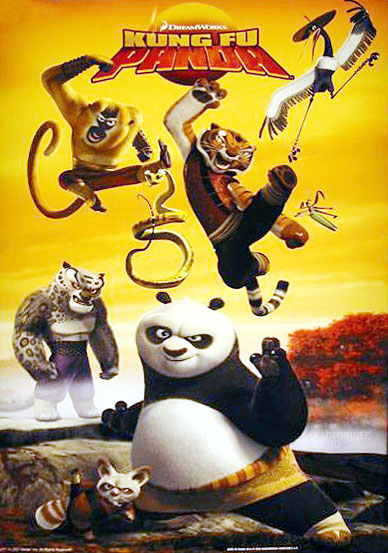
If you haven't seen Kung Fu Panda, go see it this weekend! It's a hilarious film, and the animals are so cute. I thought it would be fun to take a closer look at each of the main characters in the film and learn more about the animal species.
Of course, first there's Po the panda, who works in his father's noodle shop and turns out to be a kung fu warrior. I won't go into detail here about pandas since I've covered them thoroughly, so if you'd like to read more on pandas, see my previous posts and The Jungle Store's Panda Fact Page.
Check out this clip of Po showing off his moves with Master Shifu:
Shifu is a red panda. The red panda is slightly larger than a domestic cat and is a mostly herbivorous animal, specializing in feeding on bamboo. It is an excellent tree climber and spends most of its time in trees when not foraging. Red pandas are endangered, due to poaching and fragmentation of their habitat due to deforestation.
 Then there are the Furious Five: Tigress, Monkey, Mantis, Viper, and Crane. The Furious Five is a group of highly-skilled martial artists trained by Shifu. I have already covered tigers and monkeys in previous posts and fact pages, so I will skip over them.
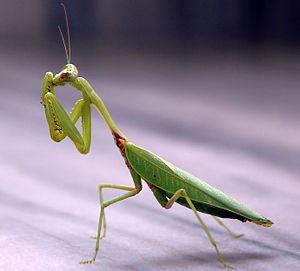
Mantis is a preying mantis . Mantises are notable for their hunting abilities. Their diet consists of living insects, and sometimes, small animals. Most mantises are ambush predators, waiting for their prey to come too close before snatching them up.
 Viper is a viper snake, a very colorful and robust animal. The viper snake lives in wet places and also in mountains in small caves. The viper's bright colors help it survive on the floor of the rain forest. This snake can hang by its tail from a branch and catch its prey, which includes birds, amphibians, lizards, small mammals, and nestling. It kills its prey by injecting poisonous venom from its fangs. The viper snake is endangered because its beautiful, smooth skin is in high demand in the fashion industry.

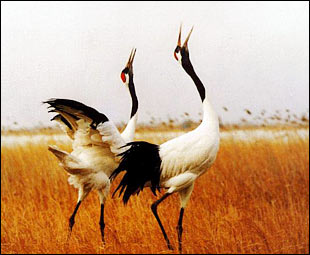
Crane is most likely a red-crowned crane, a species of bird that is very large and is the second rarest kind of crane in the world. In east Asia, the red-crowned crane is a symbol of luck and fidelity. It eats small amphibians, aquatic invertebrates, insects, and marshy plants. Sadly, the red-crested crane is one of the most endangered species of birds in the world.
Tai Lung is the evil snow leopard who escapes from prison and seeks to destroy the Valley of Peace. The snow leopard is a large cat native to the mountain ranges of Central Asia. It is a rare and secretive animal, and because of this, the exact number that remains in the wild is unknown. Snow leopards live solitary lives, except when females are raising cubs. The leopard eats mostly sheep and goats, as well as small prey including marmots, hares and larger birds. They are opportunistic predators, meaning if there is livestock near, snow leopards will attack them. Want to learn more about snow leopards? Check out Zoobooks "Little Cats" softcover.

Have you seen Kung Fu Panda? What did you think of the movie? Who was your favorite character? I'd have to say mine was Po - he was just too funny! My favorite Po quote: "I just ate... so my kung fu may not be as good as later on."


