Thursday, December 31, 2009
How Polar Bears Stay Warm

Wednesday, December 30, 2009
Bonobos vs. Chimps
Bonobos look very similar to chimpanzees; however, even though they too are part of the great ape family, they have a lot of differences from chimps. Bonobos tend to be slimmer and have smaller heads. They are omnivores (like chimps), but they don't eat other mammals or monkeys. They stick with small fish, insects and various plants. When it comes to their territory, bonobos are less aggressive and don't seem to have established territories that they need to protect. Bonobos are unique to one country in Africa, the Democratic Republic of Congo, and they don't live anywhere else.
Tuesday, December 29, 2009
Mountain Goats Aren't Goats?
Mountain goats are not actual goats; they're known more as goat-antelopes actually. They have cloven hooves that are split into two toes to help with balance, and they have rough pads at the bottom of their toes to help them climb.Monday, December 28, 2009
Fennec Foxes Know How To Stay Warm and Cool
The Fennec Fox is the world's smallest fox; however, its ears reach 6 inches in length. They live in the Sahara desert and have unique features that help them adapt to their extreme environment. These nocturnal animals have long thick hair to keep them warm on cold desert nights; however, their big ears help to radiate heat during those hot days.
Thursday, December 24, 2009
A Snowy Delight
I'm hoping for a white Christmas this year, and I think my wish might come true! So, to get in the spirit, I decided to write about the Snowshoe Hare. The Snowshoe Hare lives in forests in northern regions. During the winter, its large feet help it hop atop the snow, and its snow-white coat helps it stay camouflaged. However, in the spring the Snowshoe Hare's coat turns a brownish color, as the snow begins to melt away.
Wednesday, December 23, 2009
The Largest Otter
Giant River otters, also known as South American otters, are the largest otters in the world, sometimes reaching up to 6 feet long. They only live in the Amazon, Orinico and La Plata river systems. They have webbed feet and water resistant fur, and their nostrils and ears close whenever they dive under water. Female South American otters give birth on land in a den where the cubs stay out of harms way for a month or so.
Sunday, December 20, 2009
An Anteater's Powerful Tongue
Anteaters have no teeth; however, their up to two-foot long tongues allow them to swallow as many as 35,000 ants and termites each day. The anteater can even flick its tongue 160 times a minute. Because of the ants' defensive stings, anteaters only stay at each anthill for a minute or so. However, they never crush an anthill so that they can come back to it at a later feeding time.
Friday, December 18, 2009
Walking Sifakas

Thursday, December 17, 2009
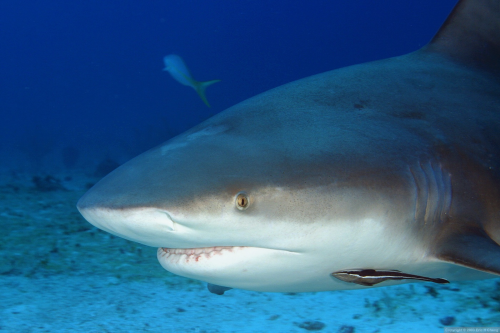
Head-Butting Bull Sharks
Bull sharks are considered to be the most dangerous sharks in the world because they are aggressive, common and often live near heavily-populated areas like tropical shorelines. They often travel inland, swimming up rivers and tributaries. In fact, they've been found thousands of miles up the Amazon River, heading towards Lake Nicaragua. Along with great whites and tiger sharks, they are one of the three sharks most likely to attack humans. Their name comes from their short snout and their tendency to head-butt their victims.
Wednesday, December 16, 2009
Pirate Skuas
Arctic skuas are known for their piracy in the sky. They actually steal most of their food from terns, puffins and other birds that carry food back their young. Skuas attack during flight and force their victims to drop their catch.Tuesday, December 15, 2009
Octopus Constructs Shelter
Monday, December 14, 2009
Fast Warthogs
Warthogs are from the same family as domestic pigs, although their heads are covered with warts that serve as protective pumps. They have very little hair, except for a thick mane on their back. Although warthogs look mean, they are actually just grazers, feeding on grasses and plants. However, when warthogs are threatened, they can run up to 30 miles per hour.
Friday, December 11, 2009
The Difference Between Apes and Monkeys
There are over 300 species of primates in the world, but there are a couple of distinctive differences that separate apes from monkeys. Apes don't have tails and are generally a lot larger. They also depend more on their vision than their smell because their noses aren't snout-shaped like monkeys' noses are. Great Apes consist of gorillas, chimpanzees, oragutans and bonobos, while the Lesser Apes consist of gibbons and siamongs.Thursday, December 10, 2009
The Standing Dugong
Dugongs are giant vegetarians that reside in the warmer coastal waters that range from East Africa to Australia. Their closest relative is the manatee; they are similar in appearance and behavior, even though the dugong's tail resembles that of a whale. Both dugongs and manatees are related to the elephant, even though neither have its same appearance or behavior. Dugongs can stay underwater for six minutes at a time, and sometimes "stand" up to breathe on their tail with their heads above water.Wednesday, December 9, 2009
Reindeer Travel Far
To get in the holiday mood, I wanted to write about caribou, otherwise known as reindeer. They are the only deer where both males and females have antlers, although not all females actually have them. During the spring, caribou herds travel north sometimes more than 600 miles. Once they reach their destination, an adult caribou can eat up to 12 pounds of food every day in the rich northern tundra of North America, Europe, Asia and Greenland. After the first snow fall, these same caribou travel back south, sometimes up to 1,600 miles.
Tuesday, December 8, 2009
Clouded Leopards Climb Trees
Clouded leopards are great climbers. In fact, they can suspend themselves upside down from a branch with the grip of their large paws and sharp claws. They can even walk down the edge of a tree in a headfirst posture — similar to squirrels — because of their short legs with rotating rear ankles. Although they're great climbers, they do most of their hunting on ground. They excel at hunting because of they have the largest canine teeth (compared to their body size) of any wild cat.
Monday, December 7, 2009
The Hidden Nutria
Nutria are large, web-footed rodents that work better in water than on land. Although their fur is shaggy and an ugly brownish yellow color, they have a very attractive fur undercoat, called nutria. In fact, nutria are often trapped for this fur. While they once only lived in South America, they have been domesticated as fur animals and bred all over the world.
Friday, December 4, 2009
Lion Tamarins Live Like Monkeys
The golden lion tamarin gets its name from its mane and thick rings of hair that it has in common with the lion. However, the tamarin has a lot more in common with its monkey relatives than any cat. This species forms social family groups, and the males even help raise their offspring. Unfortunately, the golden lion tamarin is endangered due to disappearing rain forests in South America.
Thursday, December 3, 2009
Kangaroo Cherries
Gray kangaroos can hop up to 35 miles an hour, traveling for long distances of up to 15 miles. Females have a baby one at a time, which is the size of only a cherry when born. At birth, the infant climbs into the mother's pouch without leaving for two months.
Wednesday, December 2, 2009
Ferocious Leopard Seal
The leopard seal resembles the big, feisty cat it gets it name from because of the grayish spots it has on its coat; however, the similarities don't stop there. It is also the most feared hunter of all the seals, and the only one that goes after warm-blooded prey.
Tuesday, December 1, 2009
Laughter-Like Call is Bushman's Clock
Monday, November 30, 2009
Free Shipping at The Jungle Store
Back after a great long weekend? Well, I'm here to make your Monday much better. I'm skipping the animal fact today to let all readers know about The Jungle Store's free shipping for orders over $25. The sale is valid now thru Dec. 2, so start buying whatever stuffed animal, animal fact book, or animal print bedding your loved ones may want this holiday season before the offer's over. Happy Monday!
Friday, November 27, 2009
Elk Fight For Mate
Elk shed their antlers each March, but they start to grow back as early as May so they're fully grown again by the late-summer breeding season. During the breeding season, bull elk strip the velvet from their new antlers, using them in fights that determine who can mate with whom. Usually the males with the biggest antlers win; they're typically the older males of the herd.
Wednesday, November 25, 2009
Animal Facts - Turkey Senses
Aside from their underdeveloped smell and taste, turkeys have very strong senses. They can see in color and have a wide field of vision (around 270 degrees) due to the position of their eyes, which also enables them to see two objects at once. They also have excellent hearing even though they don't have external ears, and can pinpoint sounds from as far as a mile away. Their beaks and feet highly sensitive to touch, which helps them while foraging for food.
Tuesday, November 24, 2009
Typical Male Turkeys
Monday, November 23, 2009
Animal Facts - Funny Turkey Names
Friday, November 20, 2009
Avoid Skunk's Spray
Skunks are known for their horrible-smelling spray, which is an oily liquid produced by glands under a skunk's tail. Whenever a skunk feels threatened, it can blast its spray as far as ten feet. Although the skunk's spray doesn't harm other animals, it certainly deters predators from hunting it, unless they have no other option.
Thursday, November 19, 2009
Dinosaur Turtles Living Among Us

Bonus Fact: A 403-pound alligator snapping turtle was supposedly found in the Neosho River in Kansas in 1937.
Wednesday, November 18, 2009
Stealth Mountain Lions
Mountain Lions, also known as pumas, cougars and catamounts, can be found all over the Americas. In the early 20th century, mountain lions were killed off in the Midwestern and Eastern states by farmers whose livestock were attacked by these stealth animals. While there are still many in the Western states and Canada, only four attacks and one human death happen each year in all of the U.S. and Canada.
Tuesday, November 17, 2009
Squirrels Across the Globe
Whether you hate them or love them, almost everyone runs into a squirrel on a daily basis because over 200 species live across the globe. However, they don't live in Australia. The smallest squirrel is a total of five inches long from head to tail, while the largest can grow up to three feet. Because it's a rodent, its teeth never stop growing to keep up with the squirrel's constant gnawing on a diet of nuts, leaves, roots, seeds and other plants.
Monday, November 16, 2009
Beware of Territorial Frogs
The Amazon horned frog is known for its size, growing up to 8 inches long. They feed on just about anything that is smaller than them, and they swallow their prey whole. They are so territorial and aggressive that Amazon villagers wear specific leather boots called botas escuerzas to prevent the frog from attacking.
Friday, November 13, 2009
Hyenas Can Be Pests
Hyenas are famous scavengers, but they actually kill and eat several birds, lizards, snakes and insects. In Africa, hyenas and humans come in contact so frequently that the Maasai people actually leave their dead to be eaten by hyenas. However, the hyenas also raid food stores and crops and often kill livestock and sometimes even humans. Because of these incidents, the hyena is thought of as a pest. While many think that the hyena is related to the dog, it's actually more closely related to the cat.
Thursday, November 12, 2009
Falcons Swoop Fast
Wednesday, November 11, 2009
Diving Seals Take A Nap
When elephant seals migrate from California to the mid-Pacific and around Alaska, they can spend two to eight months without stopping. Because there's no land to bask in the sun on and the seabed is miles below the surface, scientists didn't know how they slept during this period. However, a new study shows that elephant seals may use their long dives — sometimes up to 984 feet — to take a little nap. During the dives, they lay back and allow themselves to sink.
Tuesday, November 10, 2009
Arctic Foxes Survive Everyday Blizzards
The Arctic Fox can survive in some of the harshest climates, as cold as –58°F (-50°C). Its white coat camouflages well against any arctic tundra. In the summer, its coat changes to a brown or gray color to adapt to the fox's surroundings. In order to stay out of blizzards, the arctic fox lives in burrows; however, sometimes it creates tunnels in the snow for shelter.
Monday, November 9, 2009
Ferrets Sleep the Day Away
Black-footed ferrets sleep up to 21 hours a day, and mostly hunt during the night. They mainly prey on prairie dogs, hunting them in burrows and taking their shelter. Due to a government-assisted wipeout of prairie dog towns in the 20th century (because their underground burrows are destructive to farmers' fields), the black-footed ferret also suffered from lack of food and shelter. As a result, the animal is still endangered.
Friday, November 6, 2009
Hear Tigers Roar
At one point, there were eight tiger subspecies, and now there are only five. In the last 100 years, tiger populations have gone from hundreds of thousands to around 1,500. All of the remaining five subspecies are endangered because of hunting and deforestation issues. Thursday, November 5, 2009
Butterflyfish Camouflage With Patterns
There are over 114 species of butterflyfish. Most of them have intricate patterns with beautiful colors. These patterns work to their advantage too. Many have dark bands near their eyes, and dots on their flanks that make it hard for predators to figure out which end is their face. At night, butterflyfish stay in dark crevices where their colors camouflage with the natural reef surroundings.
Wednesday, November 4, 2009
The Pesty Cane Toad
The venomous cane toad was originally let out into the Australian wild in 1935 because scientists believed that they could help control the destructive cane beetle population. Unfortunately, the toads weren't very good at controlling beetles; however, they were quite good at reproducing themselves. When they were first released, there were about 3,000 of them; now there are over a million. Today they are considered pests, and the Australian government encourages the collection and disposal of them. Their venom can be painful, but very rarely does it kill humans.
Tuesday, November 3, 2009
Pandas Love Bamboo
The giant panda loves bamboo. On average, a single panda eats up to 28 pounds a day. It often takes them 12 hours to do so, and because of all that eating, the panda also spends a lot of time relieving itself — more than a dozen times a day. Talk about a feeding frenzy!
Monday, November 2, 2009
Friday, October 30, 2009
Dwarf Lemur's Ghostly Features
Because of the Halloween holiday, I decided to write about the lemur. The word lemur actually means ghost. These ghostly creatures are nocturnal, emerging after sunset and returning to their nests at dawn. There are five families of lemurs, but the dwarf lemur is the smallest. They spend most of their time in the trees and are very active.
Wednesday, October 28, 2009
Find Love and Friendship in the Coy Fish

Coy fish are widely cultivated in China and Japan. Their name comes from the word ‘Koi’, which means ‘carp’ in Japanese. They are found in several colors, including white, black, red, blue and yellow. Their price range depends on their rarity and their particular color pattern, making them sometimes worth thousands of dollars. Both the colorful and dull grey varieties of Coy fish represent love and friendship in Japan.
Tuesday, October 27, 2009
Baltimore Orioles Protect Young

The Baltimore oriole is Maryland's state bird, and also the name of its professional baseball team. Female Baltimore orioles create unique, hanging nests for their eggs. When they hatch, both parents feed and protect their young for up to two weeks.
Monday, October 26, 2009
Massive Anacondas
Friday, October 23, 2009
Giraffes' Height: A Blessing and An Obstacle
Giraffes are the tallest mammals in the world. Their legs alone stand at about 6 feet, making a giraffe anywhere from 14 to 19 feet tall. Because of these long legs, giraffes can run for up to 35 miles per hour. They also can find food where many other animals can't; however, they still have to travel long distances to feed their diet of hundreds of pounds of leaves each week. Although giraffes get most of their water from the leaves they chew, these animals still need a drink every couple of days. This can be a hard task because they have to bend in an awkward position to reach any watering hole, leaving them as an easy target for predators. Their height also creates an obstacle for a giraffe when it's born. Because they give birth standing up, an infant gets dropped about 5 feet when it is comes out into the world. They're tough, however, because within 30 minutes they can stand.
Thursday, October 22, 2009
Adopt a Crittercam Animal
Did you know that you can adopt a crittercam animal? Scientists learn how to protect endangered animals by studying their behaviors and the habitats they live in. And the only way to do that is by following them with a camera. Donate and watch a Humpback Whale, Elephant, Gray Seal, Loggerhead Turtle or White Shark in their environment. You can learn new animal behaviors and support scientific research with your donations. Check it out at NationalGeographic.com.
Wednesday, October 21, 2009
Unique Zebra Stripes

The zebra has the most distinctive coat out of any animal. Their stripes are unique to each animal — just like fingerprints to humans — no two are alike. Scientists believe that these stripes are used as a form of camouflage, maybe so that these stripes can make it hard for predators to identify a single zebra in a herd. Or the stripes may discourage insects that only see large areas of single-colored fur.
Tuesday, October 20, 2009
Bears Have Fun Too
Last Thursday, a black bear walked into a Hayward, Wis. grocery store and headed straight to the liquor department. The 125-pound bear walked into the beer cooler and climbed a 12-foot shelf. After about an hour on the shelf, the Wisconsin Department of Natural Resources removed it from the store. Luckily, there was no one in the liquor department at the time, and even better, not a single beer bottle was broken! Watch the footage from the surveillance cameras here.
Monday, October 19, 2009
Michael Vick Upsets Animal Rights Activists
As Michael Vick suits back up in his Philadelphia Eagles gear after spending 18 months in prison for his association with dog fighting, many animal rights activists are upset. And I’m one of them.
While I understand that there are legality issues involved that deter the NFL from banning him from the league, I’m more angry at the fans. As a pit bull owner (read Pit Bull Terriers Can Be Your Best Friend Too), I’m appalled that football fans are still wearing his jersey and forgiving him for what he did to all of those innocent dogs. The actual dog fights seemed like the least harmful crime he committed. The worst was the way he treated these animals to prepare them for fights. Confining dogs to small dark places, not feeding them, and allowing them to be raped by other dogs were among many things Vick and his entourage did to “toughen” up these dogs. Thankfully, the dogs have been put in animal shelters, and many pit bull lovers have adopted them in the past year and a half.
If you’re interested in adopting a pit bull, visit the Pit Bull Rescue Central website. These dogs are just as loving as any other breed; it’s the misuse of them that give them a bad reputation. And because of that, I could never respect Michael Vick or those who support him.
Pictured above are two photos of my loving dog, Sahara.


.jpg)