Showing posts with label Monkeys. Show all posts

Friday, May 6, 2016

Did you know? Crab-Eating Macaque

Did you know that the crab-eating macaque eats crabs?

Did you know that the crab-eating macaque troops are centered around the female crab-eating macaques? 


Did you know that the crab-eating macaques were used as the laboratory animal for the research and development of the polio vaccine?

 Did you know that some believe that the Crab-eating macaque is responsible for the extinction of forest birds and the destruction of agriculture?  

Friday, June 7, 2013

Apes vs. Monkeys

Have a hard time telling a monkey and an ape apart?  You're not alone!  Here's  the most simple way to tell the two apart. 


Most monkeys have tails and most apes do not.  Also, monkeys are more likely to be in trees, using their tails for balance.  Also, apes are generally a lot larger than monkeys.

Wednesday, August 29, 2012

Pic Of The Week - Oh, That's Cold!

You might have seen this adorable picture as it went viral on the internet a couple weeks ago. And it's no surprise why, this image is just too cute not to share (even if it is more than 10 years old)!


This is Yakini, a newborn baby gorilla born in 1999, getting a checkup from Royal Children's Hospital neonatal specialist Neil Campbell at the Melbourne Zoo in Australia. Yakini was surprised by the cold stethoscope and mad the adorable face you see on the right.. To learn more about this photo and how Yakini's doing, read this article.

And take a look at this comparison photo we found on Pinterest! It's amazing how much like us monkeys are, isn't it?

Monday, August 27, 2012

The Best New Species Of 2012

Did you know that scientists discover 15,000 to 20,000 new species every year? It seems a little hard to believe, since there are already 8 million existing species known. The International Institute for Species Exploration recently listed their top, most interesting new species of 2012 - check out a few of our favorites.

The monkey that sneezes when it starts to rain
The monkey's nose is so upturned that rain causes it to sneeze. To avoid inhaling water, they sit with their heads tucked between their legs.

The blue tarantula
This jewel-toned tarantula, which hails from Brazil, might be the prettiest tarantula we've ever seen (not that it means we actually want to see it in person).

The banded box jellyfish
As deadly as it is beautiful, this jellyfish was first sited in 2001 but a specimen wasn't captured until 2008. It is one of approximately 50 box jellyfish species.

Tuesday, September 13, 2011

The World's Smallest Monkeys

At only about six inches long and weighing four ounces, pygmy marmosets (also called Finger Monkeys) are the smallest true monkeys in the world.
Baby pygmy marmosets. Photo: FactZoo.

Native to mature evergreen forests in Brazil, Colombia, Ecuador and Peru, pygmy marmosets are usually found in areas near streams or floodplains. Although they are primarily tree-dwellers, pygmy marmosets rarely venture higher than 65 feet into the upper part of the forest canopy.

Pygmy marmosets feed primarily on tree sap and gum. They have sharp incisors and claw-like fingernails to dig into tree bark and access untapped sources of food. Other food sources include butterflies, moths, beetles and ants.
Photo: Pablo YƩpez
Pygmy marmosets are extremely social animals that feed and sleep together. Communal roosts consisting of tangles of vines and branches in trees function as sleeping sites. These marmosets spend their daylight hours feeding together in the mornings, midday’s and evenings with bouts of play, rest and grooming in between.

Despite their small size and undeniable cuteness, pygmy marmosets do not make good pets, as they do bite and throw feces. The species is currently not endangered, but as with all rainforest animals they do face threats from habitat loss.

Friday, July 8, 2011

A Salute to Space Animals

As you’re probably aware, the Space Shuttle Atlantis made its final launch today, marking an end to the shuttle program and the start of an open-ended hiatus for manned American space flight. As commonplace as shuttle missions now seem, it’s important to remember how many animals blasted off into the unknown and in many cases gave their lives to help advance space programs throughout the world.

Baker, the first monkey to survive space flight.
 The first animals launched into space were fruit flies aboard a United States V2 rocket in 1947 to explore high-altitude radiation exposure, followed just a few years later by a rhesus monkey named Albert II in 1949.


Laika, the first dog to enter orbit.
In 1957, a Russian dog named Laika became the first animal to enter orbit aboard Sputnik 2. Unfortunately, at the time the technology to reenter the atmosphere from orbit did not yet exist, and Laika was unable to survive the mission. She is memorialized by a statue and plaque at the Russian Star City cosmonaut training facility and her likeness has appeared on postage stamps. In 1960, two other Russian dogs named Belka and Strelka became the first animals to enter orbit and return alive on Sputnik 5.


Ham the chimp upon recovery from his mission in 1961.
In 1961, chimpanzees entered the space program when Ham the chimp was launched into space as part of the U.S. Mercury-Redstone 2 mission. Ham was trained to pull levers in flight to receive food, proving that it was possible to perform tasks in space. Later that same year another chimp named Enos became the first chimpanzee to enter orbit.

With manned spaceflight becoming possible in the 1960s, animals became less common on missions. However in the decades since, hundreds of animals from tortoises to mice have taken part in missions as part of scientific studies. Even as recently as May, 2011 spiders were taken into orbit on the final flight of Space Shuttle Endeavor to study the effects of zero gravity on their behavior.


Space Shuttle Endeavour
 Although the future of space exploration is uncertain, we all owe a debt of gratitude to the brave animals that have helped advance technology and our understanding of the universe.

Wednesday, July 6, 2011

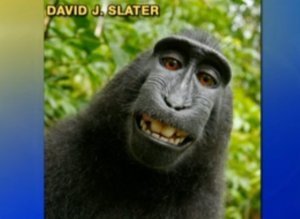
Monkey Takes Self-Portrait

In a report filed by The Telegraph, photographer David Slater got a little extra help from a crested black macaque on a recent trip to Indonesia. After setting up his camera equipment to photograph the monkeys, Slater turned away momentarily only to discover one of the macaques had swiped the camera and was taking photos of his own.


Photo: David Slater

Photo: David Slater
 Slater states that the monkey took hundreds of photographs, but only a few were in focus. He believes the macaque was attracted to the camera first by the reflection in the lens and then by the sound of the shutter.

Friday, December 11, 2009

The Difference Between Apes and Monkeys

There are over 300 species of primates in the world, but there are a couple of distinctive differences that separate apes from monkeys. Apes don't have tails and are generally a lot larger. They also depend more on their vision than their smell because their noses aren't snout-shaped like monkeys' noses are. Great Apes consist of gorillas, chimpanzees, oragutans and bonobos, while the Lesser Apes consist of gibbons and siamongs.

Bonus Fact: The amount of identical DNA in chimpanzees and humans range from 94.6% to 99.4%.

Monday, October 5, 2009

The Jungle Store Gives Monkeys

In case you didn't get to see last night's Extreme Home Makeover, you can watch it again on the ABC website. The stuffed animal monkeys that were used to decorate the room built for the 8-year-old girl, Hannah, were donated from The Jungle Store. You can find some of the exact stuffed animals here.

Tuesday, April 7, 2009

Lion in the Trees

The lion-tailed macaque is part of the Cercopithecidae family, which includes 81 different monkey species. The macaque has lion-like features; one of which being its tail, which is one-third to one-half the length of its body.

Bonus fact: Because the lion-tailed macaque lives in trees, its source of water comes from moisture found on the trees’ leaves.

Friday, June 20, 2008

The Animals of Kung Fu Panda


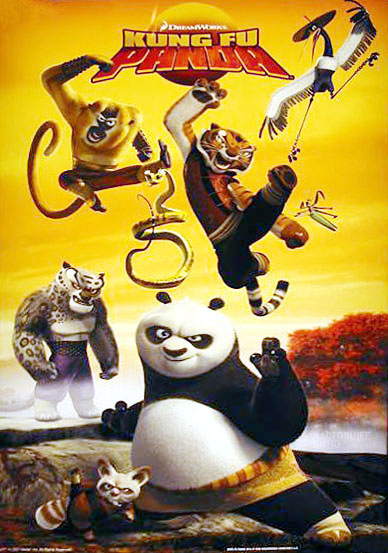
If you haven't seen Kung Fu Panda, go see it this weekend! It's a hilarious film, and the animals are so cute. I thought it would be fun to take a closer look at each of the main characters in the film and learn more about the animal species.

Of course, first there's Po the panda, who works in his father's noodle shop and turns out to be a kung fu warrior. I won't go into detail here about pandas since I've covered them thoroughly, so if you'd like to read more on pandas, see my previous posts and The Jungle Store's Panda Fact Page.

Check out this clip of Po showing off his moves with Master Shifu:


Shifu is a red panda. The red panda is slightly larger than a domestic cat and is a mostly herbivorous animal, specializing in feeding on bamboo. It is an excellent tree climber and spends most of its time in trees when not foraging. Red pandas are endangered, due to poaching and fragmentation of their habitat due to deforestation.
Then there are the Furious Five: Tigress, Monkey, Mantis, Viper, and Crane. The Furious Five is a group of highly-skilled martial artists trained by Shifu. I have already covered tigers and monkeys in previous posts and fact pages, so I will skip over them.

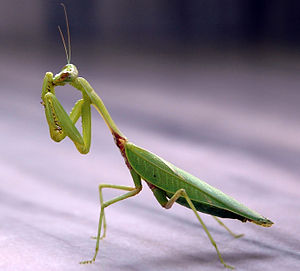
Mantis is a preying mantis . Mantises are notable for their hunting abilities. Their diet consists of living insects, and sometimes, small animals. Most mantises are ambush predators, waiting for their prey to come too close before snatching them up.

Viper is a viper snake, a very colorful and robust animal. The viper snake lives in wet places and also in mountains in small caves. The viper's bright colors help it survive on the floor of the rain forest. This snake can hang by its tail from a branch and catch its prey, which includes birds, amphibians, lizards, small mammals, and nestling. It kills its prey by injecting poisonous venom from its fangs. The viper snake is endangered because its beautiful, smooth skin is in high demand in the fashion industry.

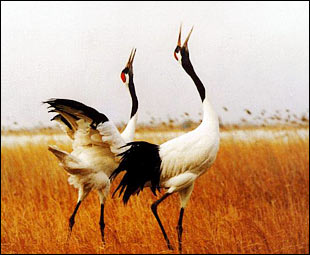
Crane is most likely a red-crowned crane, a species of bird that is very large and is the second rarest kind of crane in the world. In east Asia, the red-crowned crane is a symbol of luck and fidelity. It eats small amphibians, aquatic invertebrates, insects, and marshy plants. Sadly, the red-crested crane is one of the most endangered species of birds in the world.

Tai Lung is the evil snow leopard who escapes from prison and seeks to destroy the Valley of Peace. The snow leopard is a large cat native to the mountain ranges of Central Asia. It is a rare and secretive animal, and because of this, the exact number that remains in the wild is unknown. Snow leopards live solitary lives, except when females are raising cubs. The leopard eats mostly sheep and goats, as well as small prey including marmots, hares and larger birds. They are opportunistic predators, meaning if there is livestock near, snow leopards will attack them. Want to learn more about snow leopards? Check out Zoobooks "Little Cats" softcover.

Have you seen Kung Fu Panda? What did you think of the movie? Who was your favorite character? I'd have to say mine was Po - he was just too funny! My favorite Po quote: "I just ate... so my kung fu may not be as good as later on."

Tuesday, June 10, 2008

Good Fathers - Marmosets

Does having children make men smarter? I know that's not the way it's played out on TV sitcoms, but there is some pretty solid evidence that becoming a dad increases brain power and learning among Marmosets.

Marmosets are small primates found in the jungles of South America. They live in stable, family groups consisting of a monogamously mated pair, offspring and extended family members. When babies are born, it is almost always fraternal twins. The father helps the mother through delivery; he cleans the infants and carries them on his back for their first months of life. When the infants need nursing, he will return them to their mother, and both parents partake in the socially important ritual of grooming their young. When the babies are weaned to solid food, it is the father who feeds them and teaches them where to find a meal.

Scientists were conducting experiments on marmosets to test male testosterone levels when introduced to the scent of ovulating females. In most other primates, male testosterone levels shot up, making them more aggressive and anxious to mate. Not so among marmoset dads. Their testosterone levels remained the same, perhaps because they need to remain available to their mate and committed to the rearing of their children. A subsequent study comparing marmoset fathers with marmosets who had no off-spring found that the dads had better connected neurons and more activity in the prefrontal cortex of their brain. The prefrontal cortex is the part of the brain that allows higher, more complex planning and the ability to handle tasks. According to the scientists, it was not the simple act of fathering a child that caused the increased brain connectivity, but the process of parenting. Marmoset fathers are responsible for over 70% of their offspring's care. Nice to know they've got the brain power to handle it.

Carmen Busko provided our photograph.

Saturday, March 8, 2008

Animals in Literature

It is true that Roald Dahl's book, The Twits, is about the horrid and rotten Mr. and Mrs. Twit. But, if it weren't for some truly wise animals, those Twits would never receive their proper come-uppance.

Life would have probably remained okay if Mr. & Mrs. Twit had kept their nasty tricks and general unpleasantness to themselves. Pretending worms are Mr. Twit's spaghetti and giving Mrs. Twit "the shrinks" kept it all in the family. But the Twits fancy themselves Monkey Trainers and enjoy feasting on Bird Pie. Once the HugTight sticky glue comes out, Muggle-Wump, the monkey, his wife and two small children, know they have to do something. They enlist the help of the Roly Poly bird from Africa, and play a trick worthy of the Twits.

This is a fun, fast-paced story. Just make sure you've eaten before you read it!