Monday, November 24, 2008

Happy Thanksgiving! Fun Turkey Facts

Here are a few fun facts about turkeys that you can share with your family and friends during Thanksgiving dinner. To learn even more about turkeys, visit the turkey animal facts page.
  • Turkeys have heart attacks. When the Air Force was conducting test runs and breaking the sound barrier, fields of turkeys would drop dead.
  • Turkeys can drown if they look up when it is raining.
  • Turkeys spend the night in trees. They fly to their roosts around sunset.
  • Turkeys fly to the ground at first light and feed until mid-morning. Feeding resumes in mid-afternoon.
  • Gobbling starts before sunrise and can continue through most of the morning.
  • A wild turkey has excellent vision and hearing. Their field of vision is about 270 degrees. This is the main reason they continue to elude some hunters.
  • A spooked turkey can run at speeds up to 20 miles per hour. They can also burst into flight approaching speeds between 50-55 mph in a matter of seconds.
  • In 2007, the average American ate 17.5 pounds of turkey.
  • The heaviest turkey ever raised was 86 pounds, roughly the size of a large dog.

Wednesday, November 19, 2008

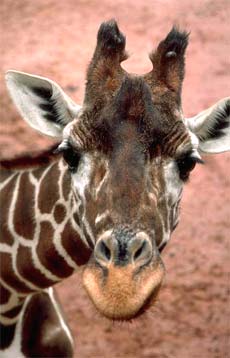
What Sound Does a Giraffe Make?


Have you ever wondered what sound a giraffe makes? Giraffes are usually silent, but they do make noise in certain situations:

~Calves (baby giraffes) bleat and make a mewing call.
~Cows (female giraffes) seeking lost calves bellow.
~Courting bulls (male giraffes) sometimes let out a loud cough!

Also, giraffes have been heard snorting, moaning, snoring, hissing, and making strange flutelike sounds!

Recent research has shown evidence that the animal communicates at an infrasound level.

Know someone who loves giraffes? This giraffe Christmas ornament might be the perfect gift this holiday season.

Friday, November 14, 2008

Is Obama Getting A Hairless Puppy?

A hairless puppy might become the new White House hound. A Peruvian association is offering U.S. President-elect Obama's family Machu Picchu, a hairless, hypoallergenic puppy. This could be the perfect choice for Obama's daughter Malia, who is allergic to most breeds.
View a video of the hairless puppy here:

Monday, November 10, 2008

Quick Animal Fact: Mosquito


The next time you go camping or spend a long day outside, remember not to wear the color blue, or you might get eaten alive! Mosquitos are attracted most to the color blue.

Wednesday, November 5, 2008

Quick Animal Fact: Goldfish

The goldfish is the only animal that can see infrared and ultraviolet light!

Friday, October 31, 2008

Freakish Animal Facts

For Halloween, I thought I'd share with you some freakish animal facts for your entertainment.

  • The ears of a cricket are located on the front legs, just below the knee.
  • The heart of a shrimp is located in its head.
  • The sex organ on a male spider is located at the end of one of its legs.
  • Camels have three eyelids to protect themselves from blowing sand.
  • Some frogs are able to be frozen and then thawed, and continue living.
  • A cockroach can survive for about a week without its head before dying of starvation.
How's that for freaky?! HAPPY HALLOWEEN!!!


Thursday, October 30, 2008

Wednesday, October 29, 2008

Quick Animal Fact: Giant Squid

A giant squid's eyes are the largest of any animal, having a diameter of 15 inches.

Friday, October 24, 2008

The Ladybug

Many people are fond of ladybugs because of their colorful, spotted appearance. But farmers love them for their appetite. Most ladybugs voraciously consume plant-eating insects, such as aphids, and in doing so they help to protect crops.

Ladybugs lay hundreds of eggs in the colonies of aphids and other plant-eating pests. When they hatch, the ladybug larvae immediately begin to feed. By the end of its three-to-six-week life, a ladybug may eat some 5,000 aphids.Ladybugs are also called lady beetles or, in Europe, ladybird beetles.

There are about 5,000 different species of these insects, and not all of them have the same appetites. A few ladybugs prey not on plant-eaters but on plants. The Mexican bean beetle and the squash beetle are destructive pests that prey upon the crops mentioned in their names.

Ladybugs appear as half-spheres, tiny, spotted, round or oval-shaped domes. They have short legs and antennae.Their distinctive spots and attractive colors are meant to make them unappealing to predators. Ladybugs can secrete a fluid from joints in their legs which gives them a foul taste. Their coloring is likely a reminder to any animals that have tried to eat their kind before: "I taste awful." A threatened ladybug may both play dead and secrete the unappetizing substance to protect itself.
Shop online for ladybug-themed items at The Jungle Store.

Wednesday, October 22, 2008

Unlikely Relatives: Whales & Hippos


Did you know that the hippo's closest relative is the whale? The two mammals share a common ancestor that lived about 60 million years ago.

This ancestor evolved into two groups of animals: early cetaceans, which became whales, dolphins, and porpoises, and a group of unusual land animals.

The only surviving descendent of these land animals is the hippo, making its distant cousin the whale its closest surviving relative!