Friday, July 15, 2011

Spare Polar Bear Needed

With all of the news stories about animals in need of homes, it seems strange to hear about a facility with space that needs filling. The Toronto Star reports that the Cochrane Polar Bear Habitat in northern Ontario has closed indefinitely due to the fact that they simply cannot find a polar bear. The habitat’s two most recent occupants, Bisitek and Nanook, both passed away recently from complications due to old age. Nanook died this past March at the near-record age of 30, leaving the habitat vacant for the first time.

The facility, which opened in 2004, is unique in that it has a wading pool where visitors can actually swim with the polar bears, separated by only a sheet of bulletproof glass.


Aurora, a former temporary resident, swims up to the glass.
Photo via the Toronto Star courtesy of the Cochrane Polar Bear Habitat.
Due to the severe economic impact a permanent closing of the state-of-the-art habitat could have on the small community, city officials are actively seeking another polar bear in need of a home. Bisitek and Nanook were both former zoo residents who came to the Cochrane habitat to live out their golden years, while other bears have been housed there on loan from the Toronto Zoo for short periods of time.

Polar bears are threatened in the wild, so obviously any potential resident would have to be captive-born or unable to be released into the wild. City officials are hopeful that a two year old cub born in a Quebec zoo may be on his way to Cochrane in the fall, but nothing has been made official.

More about the Cochrane Polar Bear Habitat.

Thursday, July 14, 2011

Interesting Dog Breeds: The Pharaoh Hound

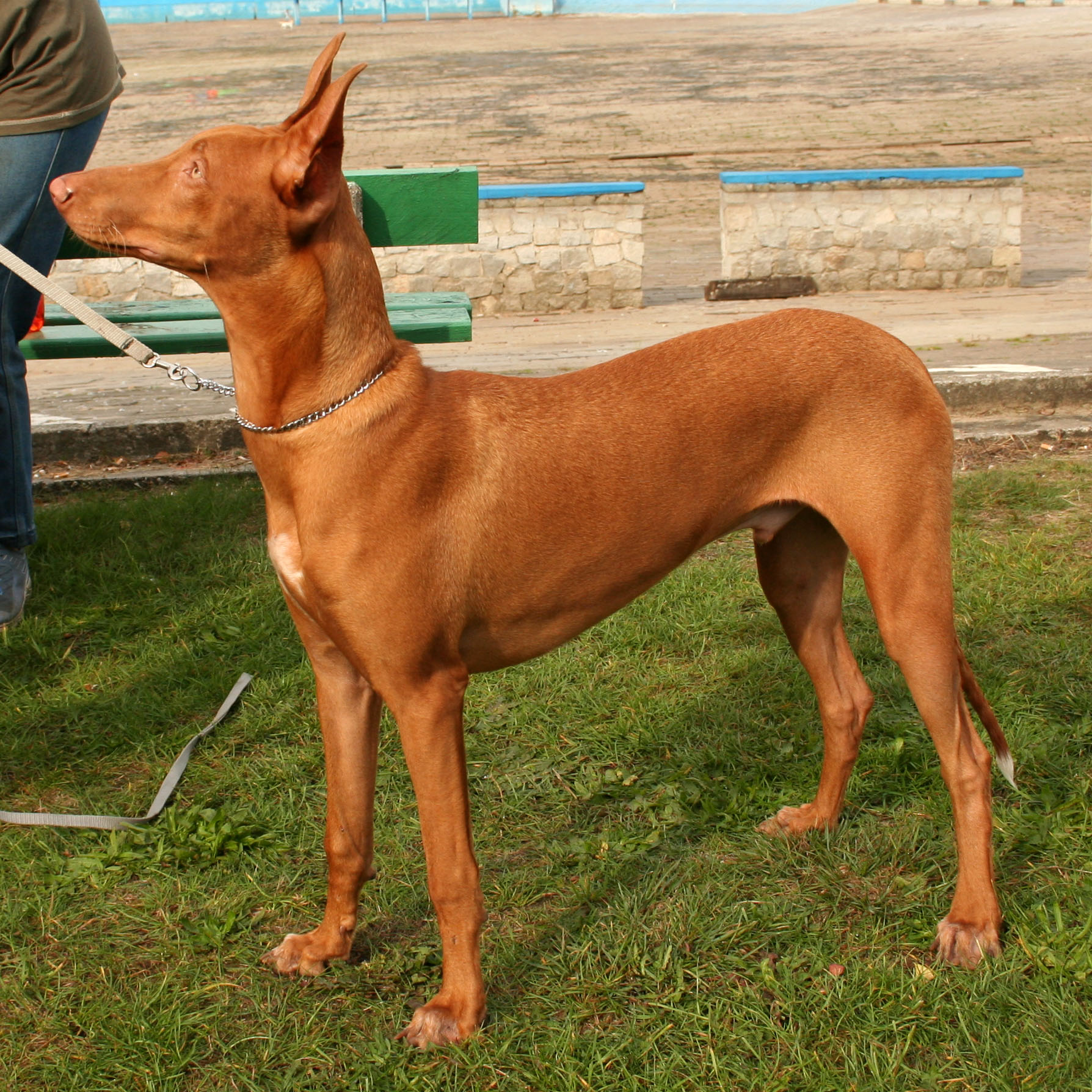
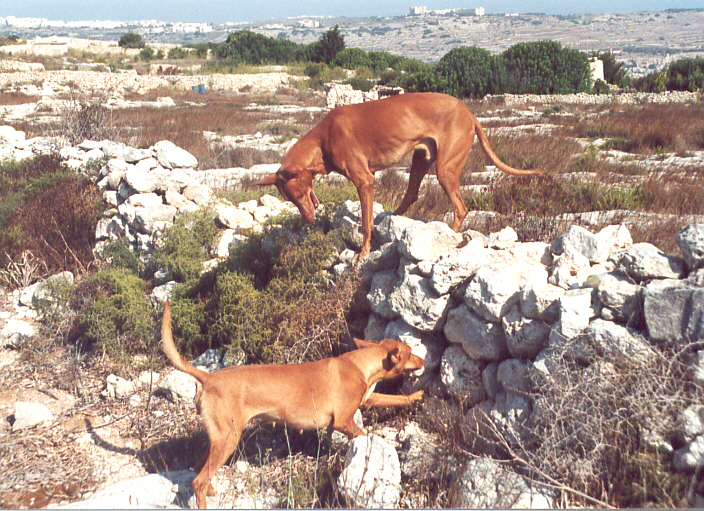
The pharaoh hound is thought to be one of the oldest dog breeds on the planet, and some believe its ancestry can be traced back as far as 6000 years ago in ancient Egypt. While this regal hound does bear a striking resemblance to the dogs depicted in ancient Egyptian sculptures and drawings, it truly gained popularity in the Mediterranean nation of Malta, where it is believed the dog was introduced by Phoenician traders in ancient times. Known as kelb-tal fenek, which means “rabbit dog” in Maltese, the pharaoh hound flourished in this island nation as a hunting companion and was first imported to England and later the United States in the latter half of the 20th century.


Photo: Pleple2000

Pharaoh hounds resemble greyhounds in build, and are extremely fast, graceful dogs. However, they have an even temperament and are very loving towards their owners if trained well. They can be quite reserved towards strangers, so this is one dog that won’t jump all over your company! Pharaoh hounds are medium-sized dogs, usually growing to about two feet tall and weighing 45-55lbs. Typical of sight hounds such as whippets and greyhounds, the pharaoh should never be allowed off-leash unless in an enclosed area, as they will chase rabbits and other small animals regardless of commands.

Rabbit Hunting.
Photo: Jan Eduard

Perhaps one of the most endearing and unique traits of the pharaoh hound is that it will “blush” when excited, with its nose and ears turning a darker shade of red. In other words, they’re like canine mood rings!
Photo: Jan Eduard

Wednesday, July 13, 2011

The World's Largest Flying Animals

If you’ve ever been to the airport and have seen or taken a trip in a jumbo jet, it can seem amazing that these planes can even get off the ground. Weighing as much as half a million pounds, it takes massive amounts of thrust to get these behemoths into the air. Nature has provided its own flying giants throughout history, and here are a few of the largest.

Wandering Albatross. Photo: Mila Zinkova
The wandering albatross has the largest wingspan of any living bird. When fully extended its wings can stretch an amazing 12 feet and some birds have reportedly been spotted with 17 foot wingspans, though this is unverified. Although they weigh nearly 30 pounds, the wandering albatross can soar for several hours on a single wing beat.

Argentavis magnificens illustration by Stanton F. Fink
 As large as the wandering albatross is, it is dwarfed by the largest known bird of all time, Argentavis magnificens. Also called the Giant Teratorn, Argentavis lived during the late Miocene period about six million years ago and had an estimated wingspan of 23 feet! Though little is known about the behavior of this ancient bird, paleontologists estimate that it weighed over 150lbs and was most likely a scavenger; perhaps a distant relative to today’s giant vultures.


Illustration of Quetzalcoatlus by Mark Witton & Darren Naish
 Long before these giant birds ever took to the sky a pterosaur called Quetzalcoatlus that existed during the late cretaceous period set the record (as far as we know) for the largest flying animal ever. Though scientists have not come to complete agreement on the dinosaur’s exact wingspan, estimates from fossils collected have it between 33 and 52 feet; larger than many planes. Quetzalcoatlus had an extremely long neck and when standing on the ground could easily look eye-to-eye with a giraffe. Though it is unproven, it is estimated by some that Quetzalcoatlus could fly at 80 mile per hour for up to 10 days at a time!

Quetzalcoatlus Skeleton

Tuesday, July 12, 2011

The Fishing Cat

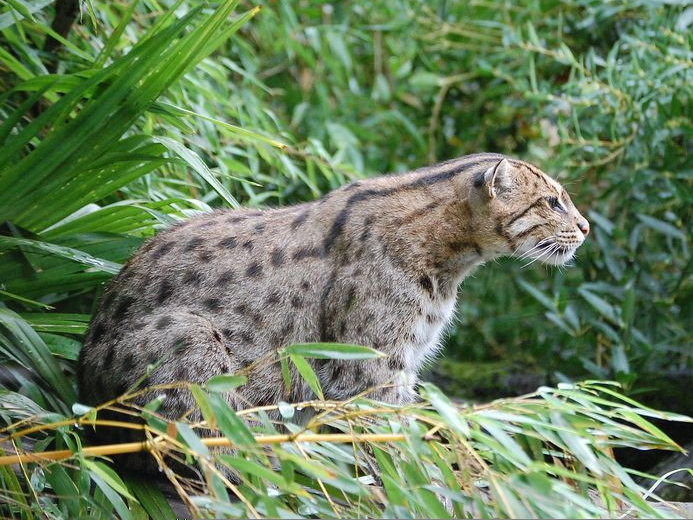
If you’re a cat owner you probably know that most of our domestic felines aren’t too fond of getting wet, and it’s likely that you’ve accumulated your fair share of scratches and bite marks from the joy that is “bath-time”. However there is one cat that not only doesn’t mind the water, but spends most of its time in and around it; the fishing cat.


Fishing cats live in Southeast Asia in the countries of Pakistan, Nepal, Bangladesh, Sri Lanka and parts of India. Though they may look similar to a domestic house cat, they’re about double the size and can weigh up to 35lbs. Their name comes from how they hunt. Fishing cats will stand in and around streams and marshes and draw their paws across the water imitating the movements of insects to attract fish, swiping their meal out of the water. They’re excellent swimmers too; they have webbed feet and can almost completely close up their tiny ears when under water.

While they may look cute, fishing cats are very much wild animals and not all that closely related to domestic cats. Like so many other animals that depend on wetlands, habitat loss due to human encroachment has hurt the fishing cat, and it is an endangered species.

Below is a video showing fishing cat kittens learning to hunt at the Cincinnati Zoo.

Monday, July 11, 2011

Donna the Hippo Turns 60

This past weekend the Mesker Park Zoo & Botanic Garden in Evansville, Indiana celebrated quite a milestone by wishing a happy birthday to Donna the hippopotamus, who turns 60 this year.


Photo: Erin McCracken
 Donna has been at the Evansville Zoo since 1956 and is the oldest living Nile hippo in captivity. The second oldest Nile hippo is Donna’s sister Julie, who lives at the Memphis Zoo and will turn 50 this year.

Although Donna’s actual birthday isn’t until August 7th, the zoo always celebrates her birthday in July. As part of the celebration, patrons could share in a birthday cake, and Donna was given watermelons and fruit popsicles as special treats. Zookeepers attribute Donna’s long life to her easygoing personality.

Story via the Evansville Courier & Press

Friday, July 8, 2011

A Salute to Space Animals

As you’re probably aware, the Space Shuttle Atlantis made its final launch today, marking an end to the shuttle program and the start of an open-ended hiatus for manned American space flight. As commonplace as shuttle missions now seem, it’s important to remember how many animals blasted off into the unknown and in many cases gave their lives to help advance space programs throughout the world.

Baker, the first monkey to survive space flight.
 The first animals launched into space were fruit flies aboard a United States V2 rocket in 1947 to explore high-altitude radiation exposure, followed just a few years later by a rhesus monkey named Albert II in 1949.


Laika, the first dog to enter orbit.
In 1957, a Russian dog named Laika became the first animal to enter orbit aboard Sputnik 2. Unfortunately, at the time the technology to reenter the atmosphere from orbit did not yet exist, and Laika was unable to survive the mission. She is memorialized by a statue and plaque at the Russian Star City cosmonaut training facility and her likeness has appeared on postage stamps. In 1960, two other Russian dogs named Belka and Strelka became the first animals to enter orbit and return alive on Sputnik 5.


Ham the chimp upon recovery from his mission in 1961.
In 1961, chimpanzees entered the space program when Ham the chimp was launched into space as part of the U.S. Mercury-Redstone 2 mission. Ham was trained to pull levers in flight to receive food, proving that it was possible to perform tasks in space. Later that same year another chimp named Enos became the first chimpanzee to enter orbit.

With manned spaceflight becoming possible in the 1960s, animals became less common on missions. However in the decades since, hundreds of animals from tortoises to mice have taken part in missions as part of scientific studies. Even as recently as May, 2011 spiders were taken into orbit on the final flight of Space Shuttle Endeavor to study the effects of zero gravity on their behavior.


Space Shuttle Endeavour
 Although the future of space exploration is uncertain, we all owe a debt of gratitude to the brave animals that have helped advance technology and our understanding of the universe.

Thursday, July 7, 2011

One Big Wombat

The wombat is a small marsupial native to Australia and New Zealand. These herbivores live in burrows and are primarily nocturnal, so they are not commonly seen; however, a wombat skeleton recently unearthed in northern Australia proves that they may have not been so small a million years ago.

Common Wombat - Photo: JJ Harrison
Modern wombats are about three feet long and weigh 40-70lbs. The skeleton that was dug up, called diprotodon, indicates an ancient wombat relative that was over six feet tall and 11 feet long, weighing as much as 6000lbs. The fossil represents the most complete diprotodon skeleton ever found, and may offer paleontologists further insight as to why these large animals went extinct.

Source: Discovery News

Wednesday, July 6, 2011

Monkey Takes Self-Portrait

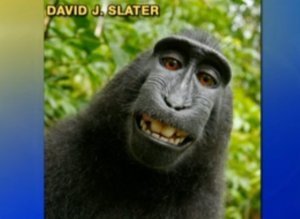
In a report filed by The Telegraph, photographer David Slater got a little extra help from a crested black macaque on a recent trip to Indonesia. After setting up his camera equipment to photograph the monkeys, Slater turned away momentarily only to discover one of the macaques had swiped the camera and was taking photos of his own.


Photo: David Slater

Photo: David Slater
 Slater states that the monkey took hundreds of photographs, but only a few were in focus. He believes the macaque was attracted to the camera first by the reflection in the lens and then by the sound of the shutter.

Tuesday, July 5, 2011

The Fox-Eagle Connection

Island foxes, found only on California’s Channel Islands are among the rarest foxes remaining on earth. At less than 20 inches long and only about six inches tall, they are significantly smaller than most foxes, and have developed and evolved in an almost completely geographically isolated island environment. Each of the Channel Islands plays host to a slightly different species of island fox, and populations of many had dwindled to less than 20 animals by the late 1990s.
Island Fox
So what was the cause of this sharp decline? Surprisingly, human population growth and loss of habitat are not completely to blame in this situation, as the majority of the Channel Islands are protected land. Rather, biologists point to a shift in eagle populations. Bald eagles were once native to the Channel Islands, but in the 1960s their populations were decimated due to use of the pesticide DDT. With the bald eagle gone, smaller golden eagles began nesting on the Channel Islands; and whereas the bald eagles eat fish, golden eagles prey upon mammals.
Golden Eagle
The golden eagle presence seemed to have little effect on island fox populations for nearly 30 years. Then in the early 1990s the National Park Service exterminated the nonnative feral pigs that had been introduced to the islands, eliminating the golden eagle’s primary food source. Due to their isolation and lack of any natural predators, the island fox was not equipped to being preyed upon, and because of this were nearly driven to extinction.

Conservationists are taking a multi-pronged approach to protecting the island fox. They are making attempts to capture and relocate golden eagles and other nonnative species to the mainland, and are no longer allowing visitors to bring pets to national parks on the islands, as island foxes are susceptible to diseases from domestic dogs. Finally, attempts are being made to reintroduce bald eagles to the Channel Islands, as a healthy bald eagle population would prevent the return of golden eagles. These steps combined with captive breeding programs will hopefully allow this rare species to continue on.
Island Foxes in Captivity

Friday, July 1, 2011

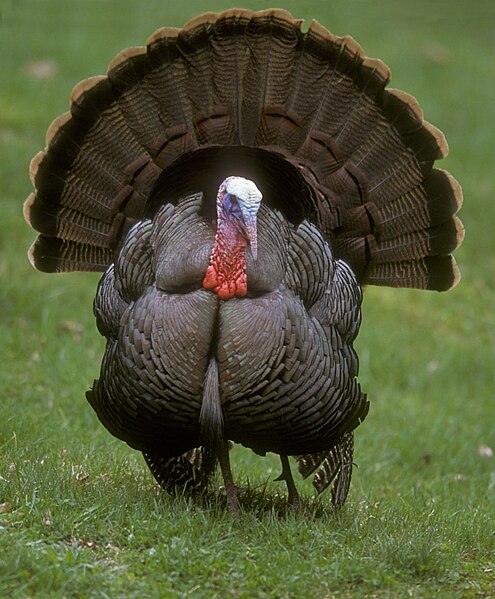
The Turkey - Almost A National Symbol

There is perhaps no greater symbol of our country than its national bird, the bald eagle. With its regal appearance it’s easy to see why the bald eagle was chosen by congress to represent America rather than the  wild turkey that Benjamin Franklin was campaigning for. In a well-known letter he wrote to his daughter in 1784, Franklin made his feelings about the national bird known.

“For my own part I wish the Bald Eagle had not been chosen the Representative of our Country. He is a Bird of bad moral character. He does not get his Living honestly. You may have seen him perched on some dead Tree near the River, where, too lazy to fish for himself, he watches the Labour of the Fishing Hawk; and when that diligent Bird has at length taken a Fish, and is bearing it to his Nest for the Support of his Mate and young Ones, the Bald Eagle pursues him and takes it from him.

With all this Injustice, he is never in good Case but like those among Men who live by Sharping & Robbing he is generally poor and often very lousy. Besides he is a rank Coward: The little King Bird not bigger than a Sparrow attacks him boldly and drives him out of the District. He is therefore by no means a proper Emblem for the brave and honest Cincinnati of America who have driven all the King birds from our Country...

I am on this account not displeased that the Figure is not known as a Bald Eagle, but looks more like a Turkey. For in Truth the Turkey is in Comparison a much more respectable Bird, and withal a true original Native of America... He is besides, though a little vain & silly, a Bird of Courage, and would not hesitate to attack a Grenadier of the British Guards who should presume to invade his Farm Yard with a red Coat on.”

We can gather from his letter that Mr. Franklin was not too big a fan of the bald eagle. But in the end, congress got their way; the bald eagle received national symbol status and the turkey got...Thanksgiving.