Tuesday, June 14, 2011

The Fastest Animal in the World (really)!

Most of us were taught growing up that the cheetah is the fastest animal that exists. While it is true that the cheetah is the fastest animal on earth, just a few thousand feet up, it’s a different story.

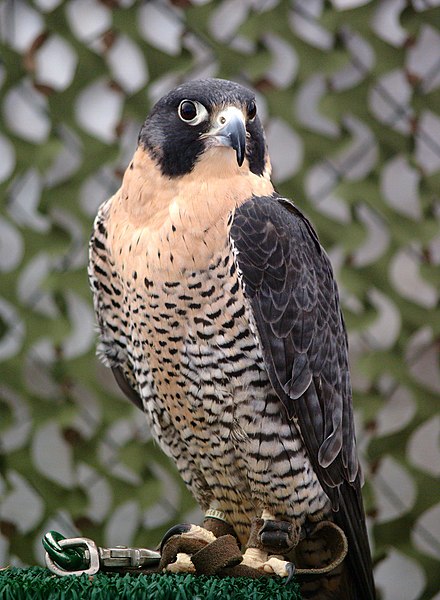
The peregrine falcon, a bird of prey common to most of the world, actually holds that title. The peregrine almost exclusively preys upon birds that it catches in mid-air. To hunt, it either perches or soars high above the ground scanning for birds. When prey is spotted, the falcon folds in its wings and feet to streamline itself, and begins a high-speed dive, called a stoop. In this dive, the falcon may reach speeds of over 200mph, usually stunning its prey by striking it with a closed talon.

Peregrine falcon in captivity. Photo: Carl Mueller
 Until recently, scientists were unsure just how fast peregrine falcons really went in their dives. In the below video by National Geographic, scientists were able to record one such dive where the falcon reached 242mph! And they may be able to go even faster…

Monday, June 13, 2011

The Wisest Tortoise of Them All

When we think about animals with long life spans, usually large mammals such as horses and elephants come to mind. While it is true that some other animals such as catfish, buzzards, and some lizards can live as long or longer than humans, the true “fountain of youth” animal has got to be the giant tortoise. These huge land-going tortoises, specifically the Galapagos tortoise and the Aldabra giant tortoise, weigh more than 500lbs and can live well in excess of 100 years.

The longest-lived tortoise ever recorded was named Adwaita. Adwaita was born in 1750 in the Seychelles islands, where he was captured by British seafarers and brought to India as a gift to British nobleman General Robert Clive, who kept the tortoise as a pet. Adwaita was transferred to the Alipore zoo in India in 1875, and continued to live there until his passing on March 23rd, 2006. Scientists’ carbon dated Adwaita’s shell and determined that he was 255 years old at the time of his death.

Adwaita in 2005. Photo: AP

Friday, June 10, 2011

A Lizard You Don't Want to Mess With!

Life as a lizard can’t be easy. Think about it. You’re tiny, cold blooded (so you can’t move that fast when it’s chilly), and there’s all kinds of creatures in your neighborhood that would like nothing better than to have you for lunch.

To deal with these stresses, the horned lizard has developed some unique weapons to make him seem positively unappetizing. First off, he’s tough to see. These lizards have the same ability as chameleons to alter their skin color and blend in to the terrain around them. If a predator does manage to spot the lizard, it will puff up its body, making it appear even larger, spinier, and harder to swallow.
Photo: Ben Goodwyn
If, however the horned lizard continues to be harassed, it will employ one of the weirdest defensive weapons in the animal kingdom; it will shoot blood from its eyes. The horned lizard can voluntarily reduce the blood flow leaving its head, which in turn causes blood vessels in the eyelids to rupture. The lizard can aim this red stream with remarkable accuracy at targets up to five feet away!  This is usually enough to deter a hungry coyote, as the blood tastes foul to them.
Photo: Zylorian
If you do happen to spot one of these nasty-looking fellows on a hike, don’t worry; they never deploy their weapons unless provoked. Just walk on by; he’s got ants to eat.

Thursday, June 9, 2011

Dolphins Making Bubble Rings

For years, scientists have recognized dolphins as being some of the smartest animals in the world, perhaps even more intelligent than monkeys or other primates. Their complex social structure and problem-solving abilities have fascinated people for centuries, but one of the coolest things they do seems to be just for fun; they make bubble rings.
Photo Credit: SeaWorld
With a puff of its blowhole, a dolphin can create these beautiful spinning rings of air as large as a basketball rim. They will often observe them, push them around, then bite them into progressively smaller rings before they finally dissipate and rise to the surface. Only a select few people have ever seen this in the wild, and no one is quite sure how they learn to do it, but it sure is cool!

Check out the video from SeaWorld below to see more of this awesome phenomenon!

Wednesday, June 8, 2011

How Animals Keep Their Cool

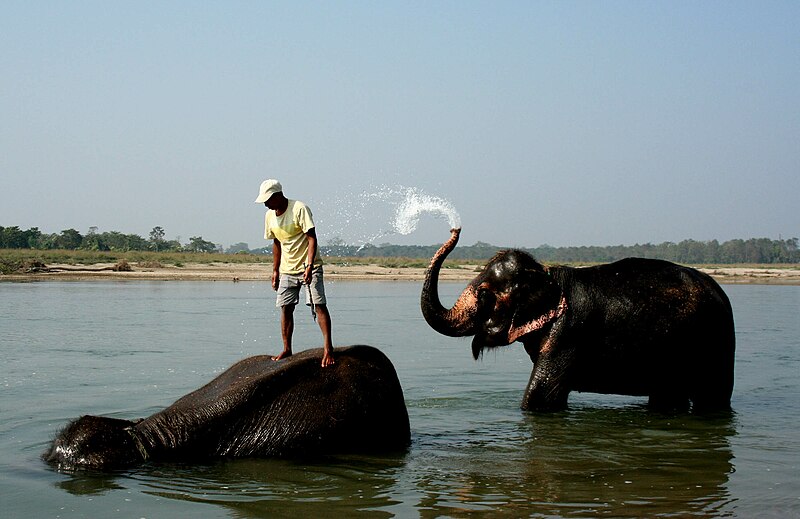
Now that summer’s here, a lot of us probably plan on spending our free time at the pool. When it’s hot outside, nothing’s better than jumping into some nice, cool water to relax. But, when a/c or an ice-cold dip isn’t an option, our bodies still find a way to keep us cool; we sweat. Animals in the wild don’t have the option to crank up the air conditioner when they get too hot, so they’ve developed their own ways to cool down.
Photo: CoolFox
Now, we all know that dogs will pant when they get hot, as their tongues are very effective at releasing heat from their bodies, but did you know they also sweat from their feet? Dogs don’t have a lot of sweat glands like we do, but if overheated they can sweat from between their toes. Other mammals such as squirrels sweat in this same way. Cows can sweat from their muzzles, and rabbits sweat from their lips, though neither nearly as much as humans. Birds have no sweat glands at all, so they will flare their feathers and open their mouths in hot weather to increase their surface area and evaporate water from the surface of their bodies.

Photo: Rene Modery
 Have you ever heard the phrase “sweating like a pig”? Well, that’s not really possible, because pigs don’t sweat at all. To regulate their body temperatures, pigs have to roll in mud or water, which draws the heat from their bodies. They look like a mess, but they’re just trying to stay cool!

Photo: Andrew Smith
Cold-blooded animals such as reptiles, amphibians, and fish have body temperatures that are the same as the air or water around them, and do not sweat. Land-going reptiles that are too hot will do their best to find shade or burrow into cool soil. If shade is not available, some have the ability to lighten their skin color, making it more reflective. Fish often seasonally migrate to deeper, cooler waters to regulate their temperatures.
Photo: Phillip Halling
Of course, we’re not the only ones who enjoy a nice swim in hot weather. Have a safe and happy summer!

Photo: Wen-Yan King


Tuesday, June 7, 2011

It's National June Bug Day!

As many of us spend our evenings relaxing outside this summer, we may receive all-too-frequent visits from the clumsy little Junebug. These inch-long beetles buzz about the night sky running into walls, getting in your hair, and doing just about anything they can to get to that oh-so-inviting porch light you have turned on.


Photo: Patrick Coin
 Named as they are because of the time of year they become most common, Junebugs are actually any one of over 260 species of New World scarab beetles (phyllophaga) that emerge from the ground (where they’ve been living as larvae for the past three years) every spring to look for food and a mate.

They might not be the cutest little creatures around; but relax, they’re harmless. Junebugs feed almost exclusively on tree leaves, and they don’t bite or sting. If you like to spend your summer evenings in the backyard, simply turning off any outside lights will cut down on the intrusion, as Junebugs are attracted to just about any light source. And if the buzzing gets to be too much for you, just remember that these little critters are only looking for love!

Monday, June 6, 2011

Are Horses Wild After All?

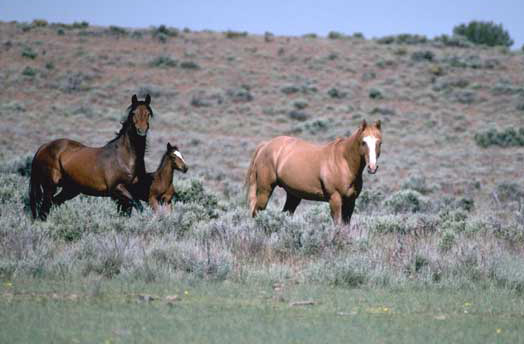
As much as horses are a symbol of the American West, it has long been accepted and taught in textbooks that they are not a native species. Historians are certain that these animals were brought to North America in the 15th and 16th centuries by Spanish explorers, and that the current populations of wild mustangs are descendents of those domesticated horses.


Wild mustangs - Photo: BLM

However, according to a report by the Los Angeles Times, federal courts are hearing a case that may change that belief, as animal rights groups are presenting DNA evidence suggesting that wild horses may have roamed North America over 1 million years ago, and that today’s horses are genetically linked to them.

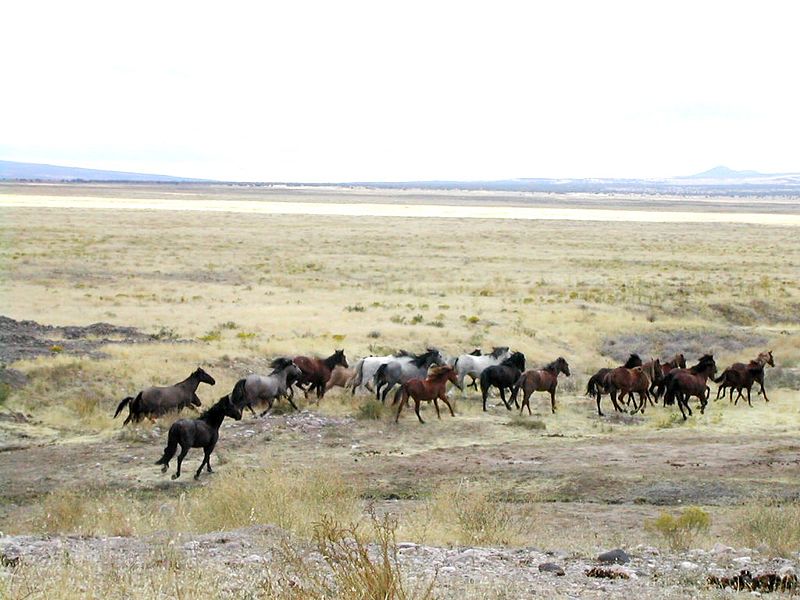
If this case can be proven in court, it may change the way wild mustangs are treated in the United States. Currently, free-roaming horses are classified as no more a wild animal than cattle, and the Bureau of Land Management (BLM) can legally control their population and corral them as necessary to allow enough land for cattle grazing. If mustangs were to become classified as native wild animals, they would have a right to graze on rangeland just as antelope and bison do, and the BLM would no longer be able to displace them for the purposes of commercial cattle feeding.

Wild mustangs - Photo: Jaime Jackson


Friday, June 3, 2011

Wild Elk Return to Missouri

When most people think of elk, they picture the mountainous landscapes of the American West. The truth is, before European settlement these animals were most common throughout the Eastern and Midwestern United States. Missouri Department of Conservation officials have sought for years to reintroduce native elk, which have been absent since 1865, to the state’s landscape, and as of just a few days ago it seems they’ve finally succeeded.

Photo: Missouri Dept. of Conservation
The 34 elk that will comprise this first herd were captured in a Kentucky conservation area, home to 1500 elk, and trucked to Missouri in May. The elk were confined to a 3 acre holding pen at Peck Ranch Conservation Area for their first few weeks in Missouri to allow them time to acclimate to their new home. On June 1st, the gates to the pen were quietly opened and the elk herd, now with an additional five newborn calves, was allowed access to their entire 221,000 acre range.

All of the animals have been fitted with GPS radio collars, allowing experts at the University of Missouri to track the herd’s movement. The Peck Ranch Conservation area is currently closed to the public to allow the herd to acclimate without human interruption, but state officials are hopeful that the elk herd will grow and eventually become a draw for tourists and wildlife lovers alike.

Photo: Missouri Dept. of Conservation

Thursday, June 2, 2011

Road-Tripping with your Pooch

Now that summer has arrived, I’m sure a lot of you are planning on taking a family vacation, and if you’re like me, the entire family includes the dog. Dogs can be great traveling companions, and are usually happy just to be with their people. However, if you take a few extra steps you can make your next road trip more fun for everyone.

To start, make sure your pup is acclimated to riding comfortably in your car for close to the length of the trip you have planned. The car should be large enough that they have plenty of room to stretch out or stand up if they want to. In other words, no Great Danes in a subcompact! If you have leather or vinyl seats, put down a sheet or towel to give your pup some more walking traction, and consider a seatbelt harness if he or she just won’t stay put.

If your dog tends to get carsick, consider feeding him a couple of ginger snaps right before the trip. Ginger has long been used to treat nausea in people, and it helps with dogs too. An elevated perch that allows them to look outside the vehicle can provide a sense of equilibrium and help calm their nerves as well. Also, be sure to take along more water than you’ll likely need. Dogs can have sensitive stomachs, and switching them immediately to a different water source when you reach your destination can make them sick. Instead, mix in some of the water you brought with the new water until your pup gets used to it.

Finally, some dogs just can’t be let loose in the car, so the use of a properly-sized crate may be necessary. Just keep in mind that crates aren’t always near a/c vents, so you’ll need to be especially watchful that your pup doesn’t overheat, and include a pet crate fan if possible. Be sure to stop frequently for water breaks, and never leave your dog in a hot car!

As always, you should consult your veterinarian for any specific pet travel issues, but hopefully these tips can help make your next trip more enjoyable for every member of your family. 


Photo Credit: LNJ

Wednesday, June 1, 2011

Snakes Alive!

Happy June, everyone! In case you didn’t know, June is the month of the snake, and to celebrate, I thought I’d show you a few of the biggest snakes in the world. But don’t worry; you’re not likely to find either of these giants in your backyard anytime soon!

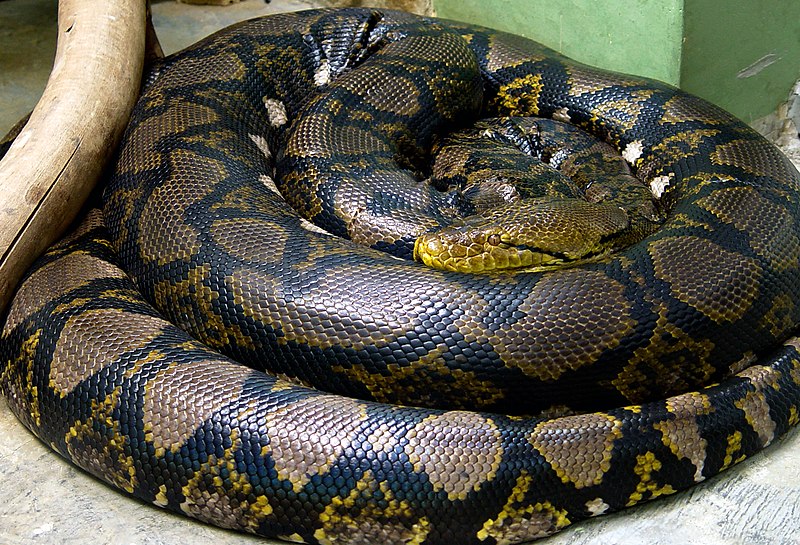
Our first contestant is the reticulated python. Native to the rainforests of Southeast Asia, these pythons can grow to 28 feet in length, making them the longest snake in the world! They’re not poisonous, but they don’t have to be. They hunt by constricting their coils around any kind of live animal they can catch.

Reticulated Python - Photo: Mariluna
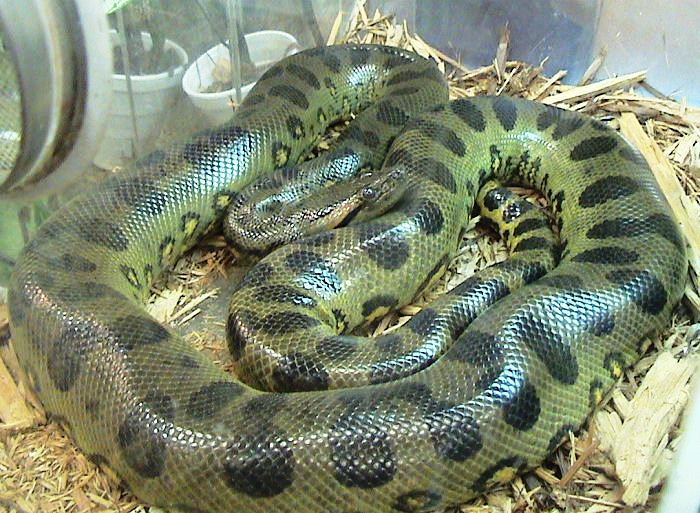
While not as long as the reticulated python, our next snake is a real heavyweight. The green anaconda, native to the Amazon rainforest can be as big around as an adult male and can weigh up to an astonishing 215lbs! They’re not short, either; with the longest recorded measuring 16 feet. Although they may be slow on land, the green anaconda spends most of its time in water, where it’s an excellent swimmer. Like pythons, anacondas are not poisonous, and hunt using their incredible constricting strength.


Green Anaconda - Photo: L.A. Dawson